




The Evolution of Conversation Intelligence
Published:


Executive summary
Conversation Intelligence was built to capture what happens on sales calls. That problem is solved — and it no longer matters. Every major revenue orchestration provider offers a version of Conversation Intelligence that records, transcribes, and summarizes. The differentiation is gone.
What's not solved is the lag gap: the distance between when something important happens on a call and when your revenue orchestration system actually does something about it. That gap is where deals stall, coaching moments expire, and forecast signals go dark.
The teams winning now aren't using Conversation Intelligence to review conversations. They're using it as a live context layer — one that feeds the forecast, triggers immediate sales execution, and powers the AI agents reasoning over pipeline in real time.
This article breaks down what that evolution looks like, why the old architecture can't get you there, and what it means to evaluate Conversation Intelligence in a world where "who said what" is just the starting point.
From capturing data to powering real-time revenue orchestration
For years, Conversation Intelligence has been considered a competitive advantage. Record your calls, transcribe them, search them, get AI summaries, and know what was said in every conversation.
That was true once. But Conversation Intelligence has hit a ceiling, and most teams don’t realize it yet. The tools that defined the category were built to capture conversations. The question now is: what do you actually do with them?
The answer to that question is what separates Conversation Intelligence that creates reports, from Conversation Intelligence that generates revenue. And it starts with understanding what Conversation Intelligence was, what it needs to become, and why the gap between those two things is costing your business more than you think.
How Conversation Intelligence has changed
The first generation of Conversation Intelligence was built around a simple premise: if you could capture what happened on a sales call, you could learn from it. Call recording and transcription software made that possible. Suddenly, managers could review calls they didn’t attend. Reps could search transcripts for competitor mentions. Teams could tag objections and track talk ratios.
This was genuinely useful. The problem is that the entire market caught up.
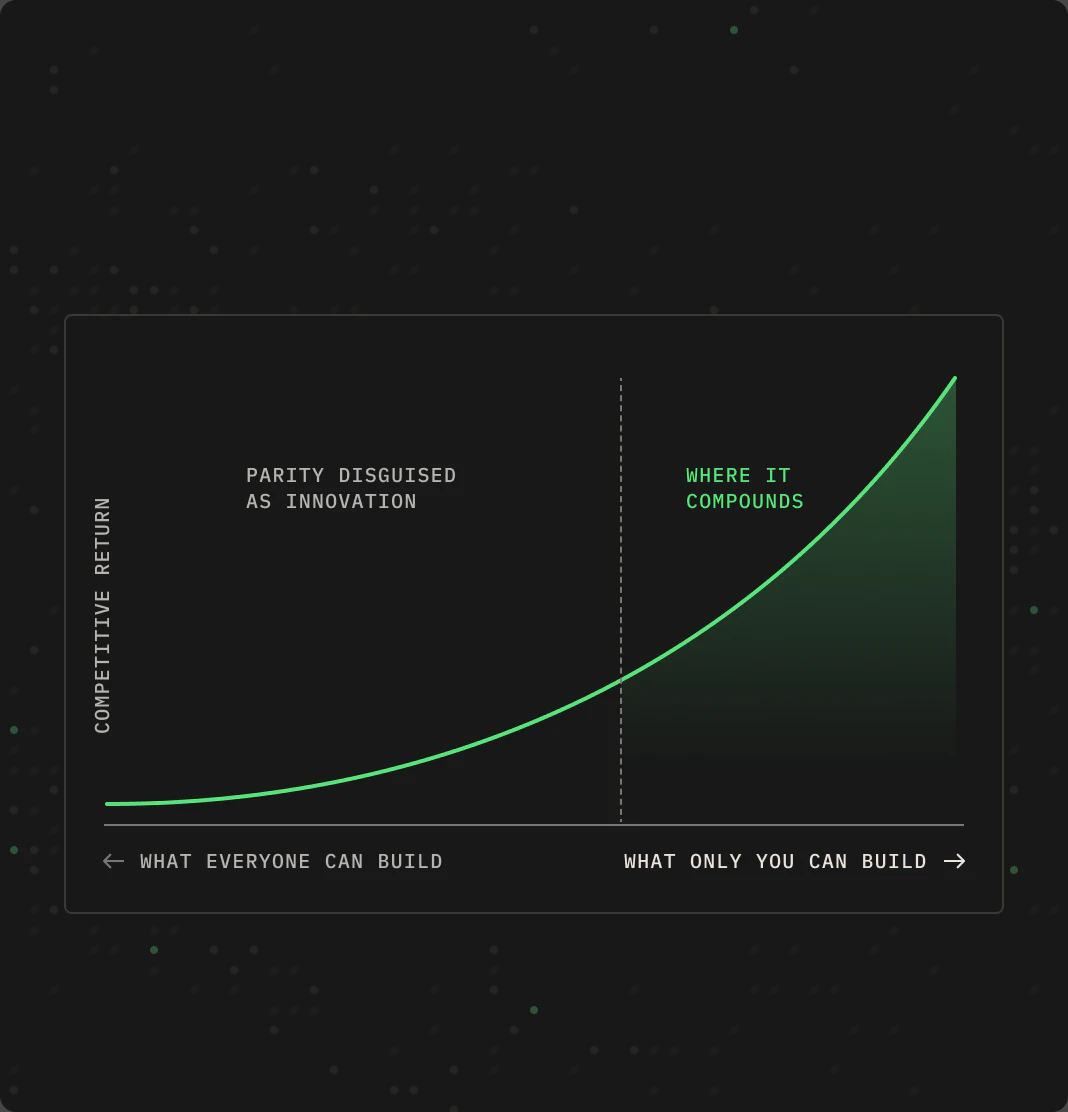
Today, call recording and transcription are baseline capabilities. AI call summaries are table stakes. Every major revenue action orchestration vendor offers them. The differentiation that once defined category leaders has been commoditized, and the teams still optimizing for it are competing on a dimension that no longer moves the needle.
The maturity level has changed significantly.
- Level 1: Conversation Intelligence was a deal aid, a standalone capability that helps reps close individual deals and gives managers a way to coach. Useful, but isolated.
- Level 2: Conversation Intelligence is a forecast input, one of several signals that gets aggregated to assess whether the quarter is tracking. Better, but still dependent on someone manually connecting the dots.
- Level 3: Conversation Intelligence is fuel for the revenue orchestration system, conversation data that feeds the forecast, triggers execution, and powers the AI agents reasoning over your pipeline, automatically and in real time.
Conversation Intelligence has evolved from just capturing conversations to activating them, but most vendors are still sitting at "Level 2." Where Conversation Intelligence used to focus on recording what happened and predicting sales outcomes, Conversation Intelligence is now about using those conversations to create rich context automatically, immediately, and built into everything else the revenue team already knows.
The distinction matters because conversation data isn’t just a record of what was said. It’s one of the richest signals in revenue orchestration. A sentiment shift on a key account call. A competitor mentioned three times in the same week across different deals. A champion who’s gone quiet. A buying signal your rep noticed but didn’t log.
Previously, information gathered by Conversation Intelligence sat in a transcript. Now, with Conversation Intelligence directly in your Salesloft workflow, information flows into the forecast, into the workflow, into the AI agents reasoning over your pipeline. The conversation doesn’t just get analyzed. It creates context. And context is what makes downstream Conversation Intelligence better.
Conversation Intelligence can now create rich context about deals and customers automatically and surface it directly in the seller workflow.
The lag gap: why isolated data costs you deals
Here’s the core problem with how most teams use Conversation Intelligence today: it lives somewhere else.
The Conversation Intelligence tool is a separate tab. The forecast lives in another platform. The rep’s daily workflow runs in a third. Every insight from a call has to travel manually, or through a fragile integration before it can reach the system where someone will actually act on it. By the time it arrives, the deal has often already moved.
This is called the lag gap. It’s the distance between when something is true on a call and when your revenue system does something about it. And it’s one of the most expensive inefficiencies in the modern sales motion.
Think about what gets lost in that gap. A rep surfaces a serious objection on a Thursday afternoon call. The manager doesn’t review the recording until Monday. The coaching moment has passed. The deal has progressed or stalled without the right intervention.
A competitive mention triggers a battlecard that never reaches the rep in the moment they needed it. A multi-threading risk is flagged in a Conversation Intelligence dashboard that nobody opens until the forecast call. A promising signal from an early-stage call never makes it into the model that’s predicting whether the quarter closes.
The solution isn’t a better integration. It’s a different architecture. The Predictive Revenue System connects conversation signals to execution, forecast, and AI in a single system, and it’s where modern Conversation Intelligence practices come into play. Rather than becoming a place reps go to review calls, it becomes a layer built into the system where revenue actually runs.
When Conversation Intelligence operates as a layer rather than a destination, the dynamics change entirely. Insights don’t wait to be discovered. They flow. A sentiment shift becomes a forecast signal. A coaching moment becomes a tracked task in the rep’s workflow. A competitive mention triggers the next play. The conversation data that used to sit in a dashboard starts doing the work it was always supposed to do.
That’s the shift from data capture to revenue orchestration and it’s where next-generation Conversation Intelligence is headed.
Rather than becoming a place reps go to review calls, it becomes a layer built into the system where revenue actually runs.
How Conversation Intelligence and MCP servers drive the signal-to-action engine
Understanding the architecture matters, but it only becomes real when you see what it enables.
Conversation Intelligence in Salesloft’s Predictive Revenue System is built on this premise: Conversation Intelligence shouldn’t live outside the execution surface. It should live inside it. With Conversation Intelligence embedded directly in Salesloft, the same place reps reach out to customers, manage accounts, and execute their daily workflow, the seam between insight and action disappears. Meanwhile, revenue and operations leaders also have a unified system where they can aggregate insights, drive strategy, and report to the board.
A rep finishes a discovery call. Salesloft has already generated an AI-powered summary, captured action items, and flagged a competitive mention directly in the seller workflow. In a traditional Conversation Intelligence setup, that information sits in a separate tool waiting for someone to act on it. In Salesloft, it’s already in the workflow. The action items surface in the rep’s Rhythm queue. The competitive signal is visible to the manager without a separate review session. The summary feeds directly into the forecast.
Salesloft is the execution layer that makes this possible for account teams at scale. It’s the system that takes signals from conversations, from engagement data, and from deal intelligence, and surfaces the right next action for every rep, on every deal, every day. When conversation data flows into Rhythm, it doesn’t just inform what reps should do. It shapes the priority order, routes coaching moments to their sales managers, and ensures that insights from prospect and customer calls translate into the behaviors that actually move pipeline.
Salesloft’s MCP server opens the conversation data layer to AI agents and LLMs operating across your revenue stack. This is where Conversation Intelligence connects to the future of AI-recommended sales actions. When an agent can reason over conversation data alongside engagement history, deal signals, and forecast inputs — all from the same system — the quality of its recommendations changes fundamentally.
This is what rich context actually means; not a transcript the model can read, but a structured, connected layer of revenue intelligence: what was said, what it signals, how it connects to the deal’s trajectory, and what the team’s winning patterns suggest should happen next. The model that reasons over that context isn’t producing generic AI summaries. It’s producing the kind of recommendations a manager would give after a thorough review of a deal, at the exact moment it’s needed, for every rep on the team.
The result is a revenue orchestration system that doesn’t wait for insights to travel. It responds in real time, at the speed of the conversation.
What this means for revenue teams evaluating Conversation Intelligence today
If you’re evaluating Conversation Intelligence tools or reconsidering the one you’re currently using, the framework has shifted. The right question is no longer “which tool can tell me which deals are on track to close?” or even “which tool can help predict sales outcomes at scale?” Those capabilities are table stakes.
The right question is: does this Conversation Intelligence system automatically create rich context, or just capture data for a human to interpret?
Most Conversation Intelligence tools, including the ones with the largest market share, operate at "Level 1." They’re excellent at capturing what happened. They’ve built their reputations on it. But they weren’t architected to be a layer in your workflow; they were architected to be a destination.
For revenue teams that have moved beyond needing a better place to review calls, that distinction is the whole game.
Conversation Intelligence that lives inside the execution surface connected to the forecast, the workflow, and the AI agents your team is building isn’t just a product upgrade. It’s a different bet on what Conversation Intelligence is for. Not a record of what your buyers said. A living context layer that makes your entire revenue system smarter every time a call ends.
That’s what "Level 3" Conversation Intelligence actually delivers. And it’s available now.
Learn how to move to next-level Conversation Intelligence today.