



The 25-Hour Problem Every Sales Manager Needs to Solve
Published:


Featuring insights from Joe Clarke, RVP of Sales, Salesloft
The average seller spends 25 hours a week on activities that could be automated, delegated, or simplified. Joe Clarke, RVP of Sales at Salesloft, recently ran a webinar for frontline sales leaders on exactly this problem. Below is a recap of the five things he's doing about it.
- Read deal dashboards for combinations, not individual signals. When a round deal value, low post-creation activity, and a stalled stage all show up together, dig into that deal before your next pipeline review.
- Coach on activities, not outcomes. Before your next 1:1, pull up which cadence steps that rep has been skipping and where their persistence has historically paid off. Start the conversation there.
- Use AI as your analytics translator. When something looks off in a dashboard, run it through the analytics agent before forming an opinion. You want a read that isn't colored by how the quarter is tracking.
- Bring the coaching engine into your 1:1s. Ask reps to review their AI feedback before the meeting and come with their own take. The conversation shifts from evaluation to problem-solving.
- Make AI adoption a team standard. When someone finds a workflow that saves time, share it with the group. Consistent platform behavior makes the AI smarter for everyone.
Why Herbert Simon's 1950s decision theory still explains how sales managers make bad calls
Herbert Simon was an economist who spent his career arguing against a comfortable fiction: the idea that humans make rational decisions when given enough information. His argument was that more information produces overwhelmed people making emotional decisions, and that structure is what separates good decision making from bad.
His decision theory breaks into four stages:
- Intelligence gathering: understanding the field and the objective
- Design: inventing or iterating on solutions
- Analysis: testing those solutions against reality
- Choice: making the call with whatever facts, constraints, and values are in play
Every sales manager runs this loop every day, usually under time pressure, often with incomplete data, and almost always inside the emotional heat of a pipeline call or a forecast meeting.
Simon's insight was that the process matters as much as the outcome. If you have a clear objective and a structured way to reach it, you make better decisions even under pressure. Without that structure, the data becomes noise.
A wealth of information creates a poverty of attention.
That line is fifty years old. It describes every sales tech stack built in the last decade.
So the bottleneck isn’t the effort sales teams put in — it’s attention
If the average seller spends 25 hours a week on work that could be automated, simplified, or delegated. More than half a work week is dedicated to work other than selling.
But why are so many reps spending all this time on other tasks? It’s because currently, most organizations require sellers to navigate a massive amount of admin work, like:
- CRM updates
- Email threads
- Call recordings
- Buying signals
- Internal handoffs
- Forecast pressure
Between talking to customers, researching leads, and doing their actual job, they’re also expected to do all this admin work. When all that activity lives in different places, managers get stuck playing detective, reps get stuck playing catch-up, and deals quietly stall while everyone is genuinely putting in their best effort. That’s how we know the issue isn’t effort — It’s where attention is going.
How Brawn GP used off-site data analysis to win the 2009 F1 championship and what it means for sales teams
In 2008, Honda sold its Formula One team to its own race engineer, Ross Brawn, after two straight years of failure. The following season, racing as Brawn GP, the team won both the constructors' and drivers' championships and then retired. It's one of the most extraordinary single-season runs in the history of the sport.
The cars were fast, but the technical advantage disappeared quickly as competitors caught up. What stuck was something less obvious: Brawn moved his data analysis off-site. The people making decisions about strategy (when to pit, when to push, when to box) were not at the track. They weren't caught up in the noise of the race, the heat of the moment, or the arguments that happen when adrenaline is high. They looked at the numbers. They made logical calls. They sent instructions.
That freed up everyone else, including Jenson Button, to just execute. Button wasn't a generational talent. What he had was a system that removed unnecessary decisions from his plate, so when it mattered, he was in pure performance mode.
The question for any sales team is: how do you build that off-site loop? How do you create the conditions where data analysis happens away from the heat, so that execution can be clean? That's what the next five tips are about.
5 ways Sales Managers can cut through data overload and coach more effectively
1. How to read Salesloft deal dashboards for risk before it's too late
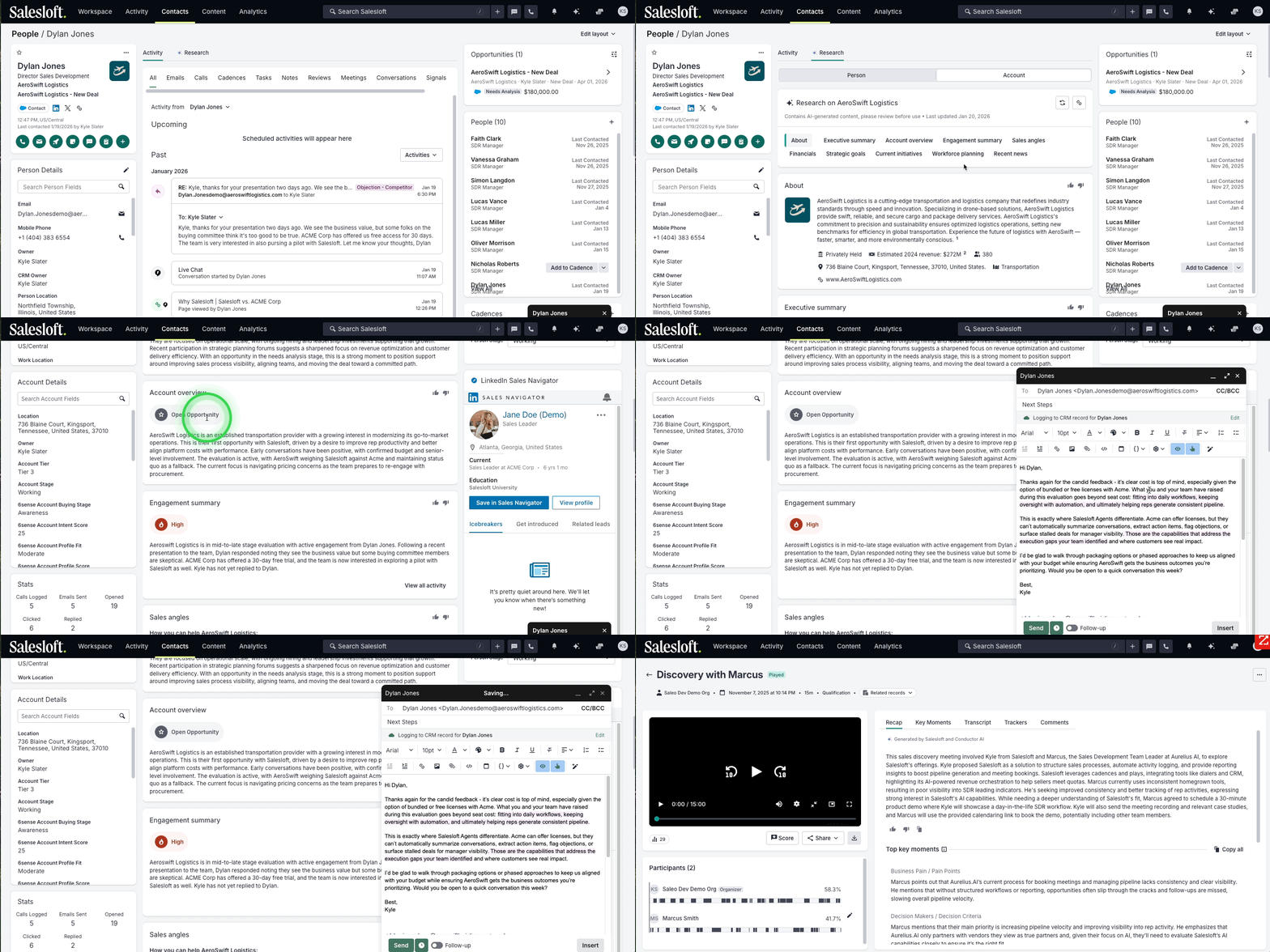
Most managers look at deal dashboards for confirmation. They scan for what they already suspect. The better habit is to look for combinations: data points that, on their own, are unremarkable, but together tell a story.
Take a deal sitting at exactly $60,000. Each of these signals on its own might not register:
- A round number on deal value
- Low activity since the opportunity was created
- A qualification stage that's been sitting too long
Together, they're three amber lights pointing in the same direction. The round number suggests someone estimated the value rather than tied it to a specific business case. That means qualification is shakier than it looks. The low activity confirms it. None of those signals alone would raise an eyebrow. Together, they tell you where to spend the next thirty minutes in a pipeline review.
2. Why sales coaching should focus on rep activities instead of deal outcomes
Coaching focused purely on outcomes is easy to deliver and hard to land. Telling a rep their close rate is down, or that a deal looks stale, creates defensiveness without direction. It can feel like "I told you so," and that drives up the kind of emotion that leads to irrational reactions rather than measured conversations.
What actually changes behavior is going back to the activities. Ask:
- Which cadence steps are reps skipping?
- Where does persistence pay off, and where are they quietly giving up two touches before the breakthrough?
- Which calls are moving deals forward, and which ones are check-ins dressed up as progress?
The data is there. The job is to use it to look backward before coaching forward. What happened? What could have gone differently? What do we do next time? The goal is to build a rep's pattern recognition so they start catching these things themselves.
3. How to use AI in Salesloft as an analytics translator, not just another dashboard
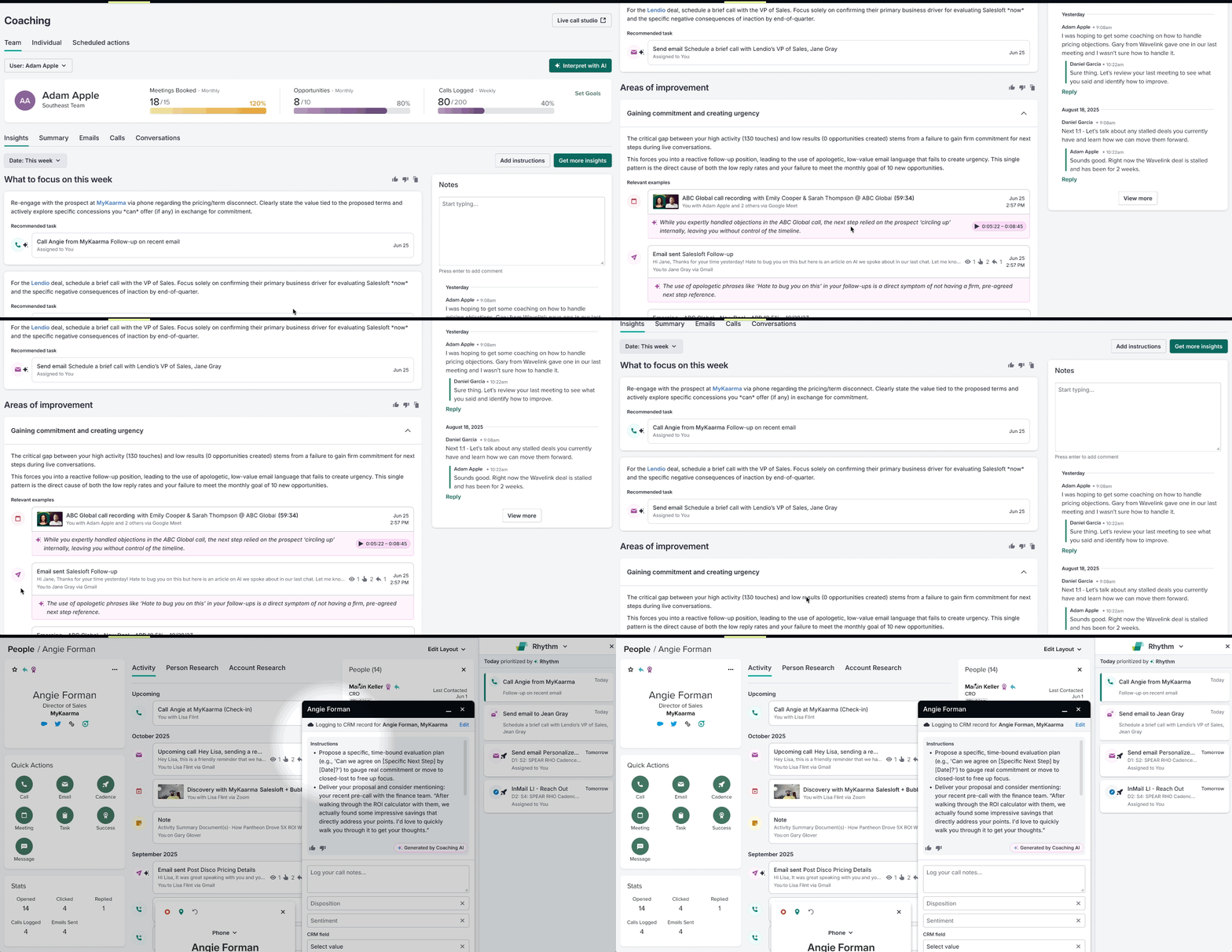
A visualization is useful. An interpretation is better. Most sales reps didn't study statistics. They can look at a chart and get a general sense of direction, but they'll miss the specific signal hiding in the shape of the data. That's not a criticism. It's just not their job to be analysts.
What AI can do is sit alongside those visualizations and translate: what's happening, what it means, and what to look at next. As Joe put it in the webinar:
It's having that agent analyze the data for me and give me that nonemotional perspective as to what's happening.
You don't have to trust every recommendation the AI makes. You can absolutely override it when context matters. But a read that isn't colored by the last conversation you had with that rep, or how the quarter is tracking, or what you need this deal to do for your number, surfaces blind spots that familiarity hides.
4. How Salesloft's AI coaching engine can make sales manager 1:1s more productive
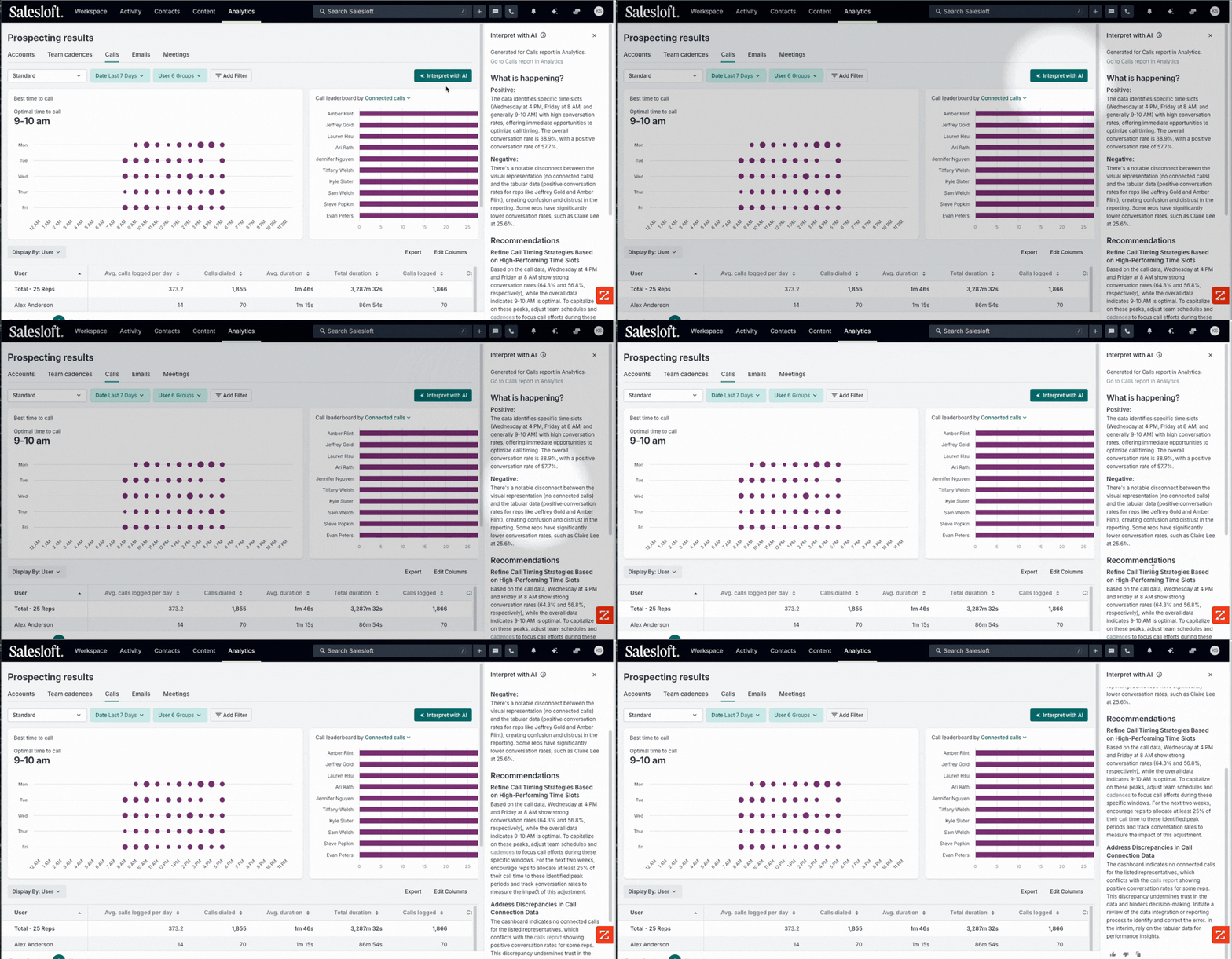
Coaching is structurally hard to land. A manager shows up to a 1:1 with their perspective, formed largely outside the more than thirty hours that rep spent working that week. The rep shows up with theirs. Both people are operating with incomplete information, and the conversation can easily become a negotiation about whose version of reality is right.
The coaching engine changes that dynamic. When a rep goes into the system before the 1:1, looks at what the AI is flagging, thinks about it, and brings their own reaction to the conversation, it stops being manager versus rep. It becomes: here's what the data says, here's what I think about it, what do we do together?
One question from the webinar Q&A cuts to the heart of how this works: How does the AI distinguish between a bad call and a bad deal? Does it separate a rep's skill gap from a deal that simply isn't viable?
It doesn't make that call for you, and that's by design. The system will flag that you're single threaded on an account, or that MEDDPIC is incomplete, or that activity dropped off after a promising start, but it won't point fingers.
The last thing we want from a coaching agent is to come in and say bad, bad, bad. What we want to point to is here's things we can do differently.
The AI surfaces what to discuss. The manager decides what it means. The rep owns what happens next.
5. Why sales teams that adopt AI workflows together get better results than those that don't
AI fails in sales teams almost always at the rollout stage. Training happens, people learn the buttons, and then everyone quietly reverts to whatever they were doing before. Maybe they pick up one or two features. Mostly, nothing changes.
What actually works is treating AI workflows the same way you'd treat any other best practice: share them, workshop them, iterate on them as a group.
- When a rep finds a prompt that generates a useful email draft, that's a team asset.
- When a manager figures out how to use the coaching engine as 1:1 prep, that workflow should spread.
- When the whole team is working consistently in the platform, the AI gets better at anticipating what they need: sharper email drafts, smarter rhythm suggestions, better signal prioritization.
If you just tell reps to use AI, they'll use it in a hundred different ways. You end up with no real efficiency gains and no compounding effect. Shared behavior is what makes the system smarter for everyone. If you're thinking about what the right foundation looks like, start here: How to Build a Revenue Tech Stack That Delivers on AI's Promise
How sales managers can stop data overload from costing them revenue
Herbert Simon argued that attention is finite, and if you don't structure how you use information, the information uses you. Sales managers in 2026 have plenty of data and very little clarity. The five approaches above are about finally getting a return on what's already there:
- Better risk reads
- Cleaner coaching
- Decisions made before the heat of the moment rather than inside it
The goal is simple: less time in the data, more time in the conversation. To see these tips in action, including the live Q&A on how AI coaching handles the difference between a struggling rep and a deal that simply isn't going to close, watch the full webinar.