





Overcoming the Top 4 Barriers to Repeatable Revenue
Published:


From Reactive to Repeatable
The revenue leaders who will win in 2025 won’t be the ones with the best product, the biggest team, or the deepest pockets. The CROs who succeed will be the ones who build a system where growth happens consistently.
We spoke with CROs and revenue executives about their biggest challenges. Yes, the market’s tight. Budgets aren’t what they once were. And sales leaders are too often stuck on their heels, reacting to problems and crises rather than building for the future.
But one theme came up again and again, and hitting the number isn’t the only challenge — making revenue repeatable is.
This guide distills what we heard into the four biggest barriers standing in the way, so you know where to focus and what to fix first.
Executive Summary
Repeatable revenue isn’t about working harder. It is about removing the barriers that keep your team from executing at scale. Keep reading to see how to take control and build a revenue system that delivers, again and again.
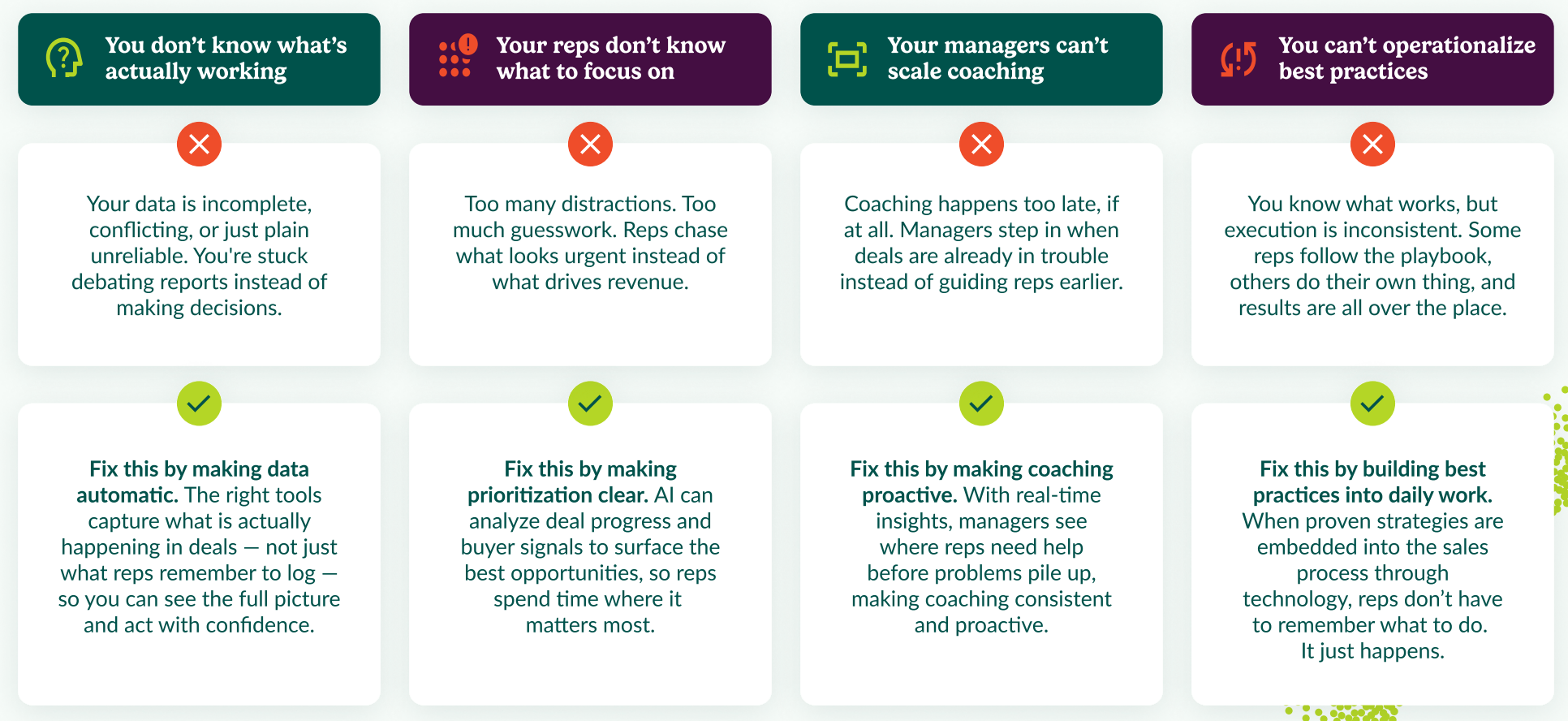
The Most Common Barriers Facing Revenue Leaders Right Now
1. You Don't Know What's Actually Working
The impact
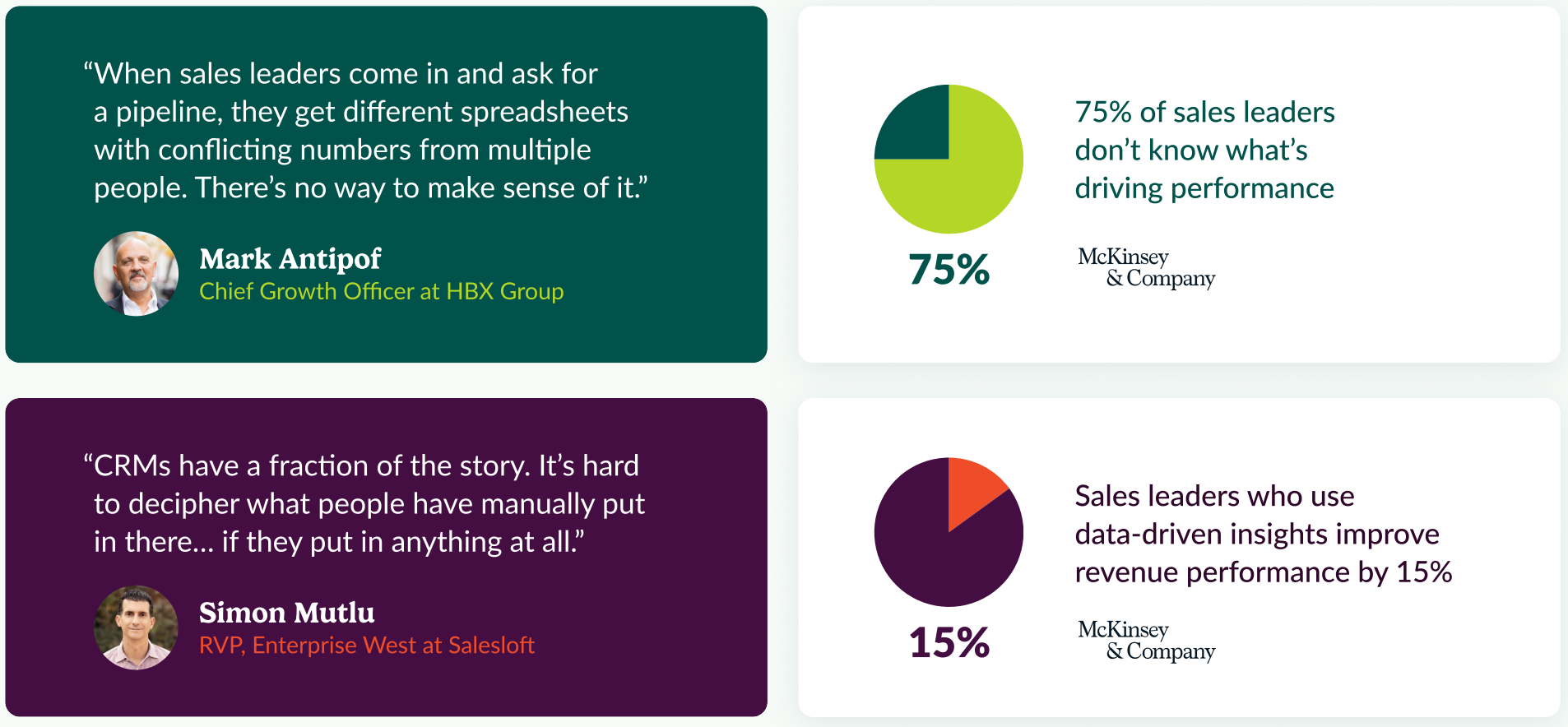
If you don’t know what’s working, you don’t have control. You can’t see what’s driving deals, where the risks are, or how to align teams across acquisition, expansion, and retention. Instead of leading with confidence, you’re stuck defending inconsistent reports, debating numbers, and hoping your forecast holds. Inaccurate data puts your credibility on the line.
The root cause
CRMs rely on manual entry, meaning they reflect what sellers choose to record, not what actually happens in deals.
And incomplete data is worse than no data at all because it creates false confidence. Sure, the problem is compliance, but it’s also that traditional sales systems were never designed to capture real-time buying behavior.
Leaders think they have a data problem when they actually have an incomplete picture of buying behavior. Conversations, intent signals, and relationship dynamics exist outside the CRM. Decisions are made based on a distorted view of the pipeline, leading to false confidence and reactive adjustments.
How to start fixing it
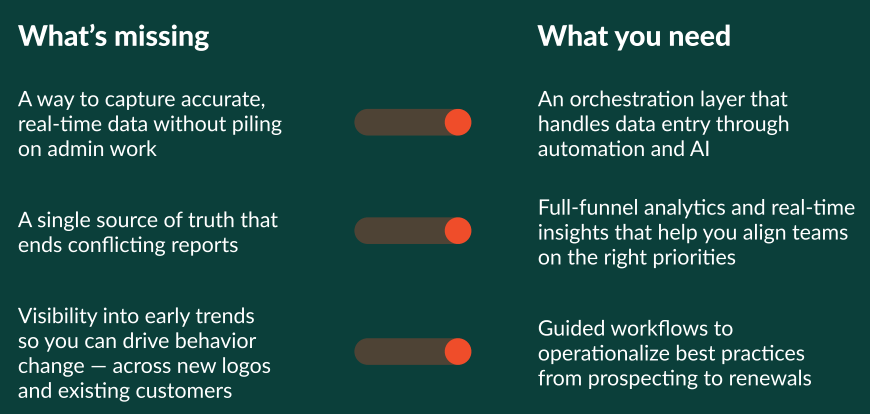
You need an orchestration layer that makes capturing and using data almost invisible to your teams, because if the admin part isn’t effortless, it simply won’t happen.
Your managers don’t need to push reps to “do better” at data entry, they need an embedded system that collects information as they work. When all these insights unify in real time, you have a foundation for orchestrating every part of the revenue cycle.
2. Your Reps Don't Know What to Focus On
The impact
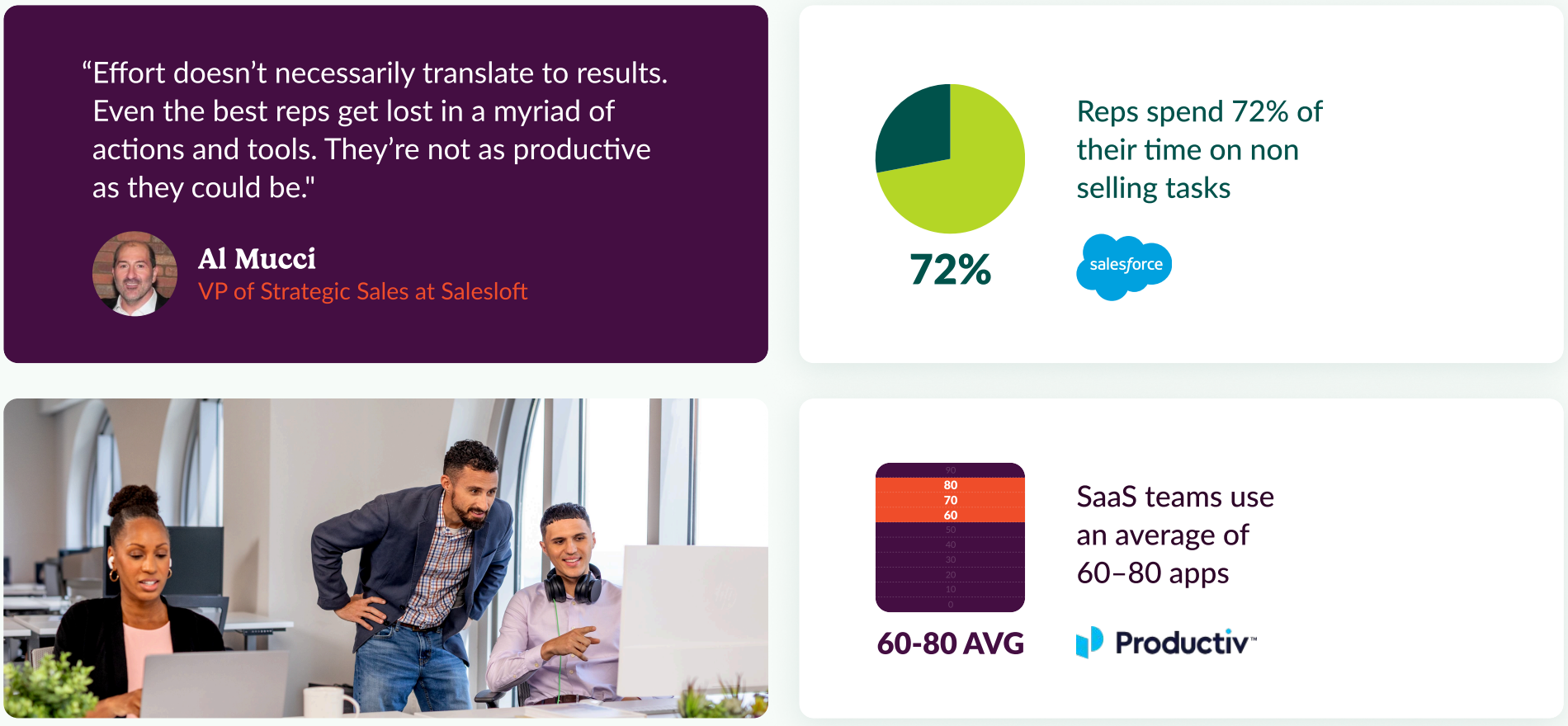
You can’t be in every deal, but you’re accountable for every miss. When reps burn hours on low-value tasks, high-potential deals stall or slip away. This inefficiency affects sales velocity, elongating deal cycles and reducing revenue predictability.
Sales leaders step in, scrambling to revive deals that should have stayed on track, diverting time and focus from more strategic moves. This cycle of last-minute heroics isn’t sustainable. Morale suffers, pipeline forecasts become guesswork, and scaling growth takes a backseat to putting out fires.
The root cause
Sellers have a lot of tools and even more signals, but they still can’t act with confidence on what matters most.
Without a clear way to prioritize based on impact, reps default to whatever is most visible.
That means chasing an email open instead of focusing on an account showing real buying intent. It means following up on a stalled deal just because it’s in late stage instead of engaging a high-value prospect who is actively evaluating solutions. The gap is a navigational one, and it costs you more than you think.
How to start fixing it
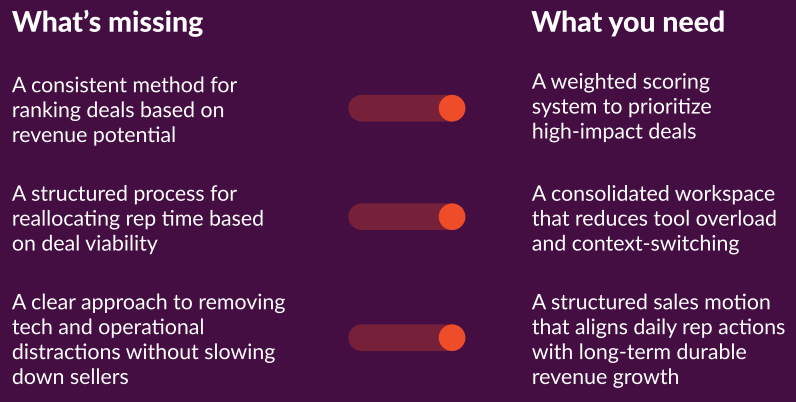
Make prioritization effortless. New AI-powered capabilities pull in data from across your sales tools — tracking buyer engagement, deal progress, and past conversion trends — to highlight the deals that actually matter.
Instead of chasing whatever looks active, reps get a clear, ranked list of high-impact opportunities and prescriptive actions to move them forward.
And by consolidating multiple tools into one place, they spend less time jumping between systems and more time selling.
3. Your Managers Can't Scale Coaching
The impact
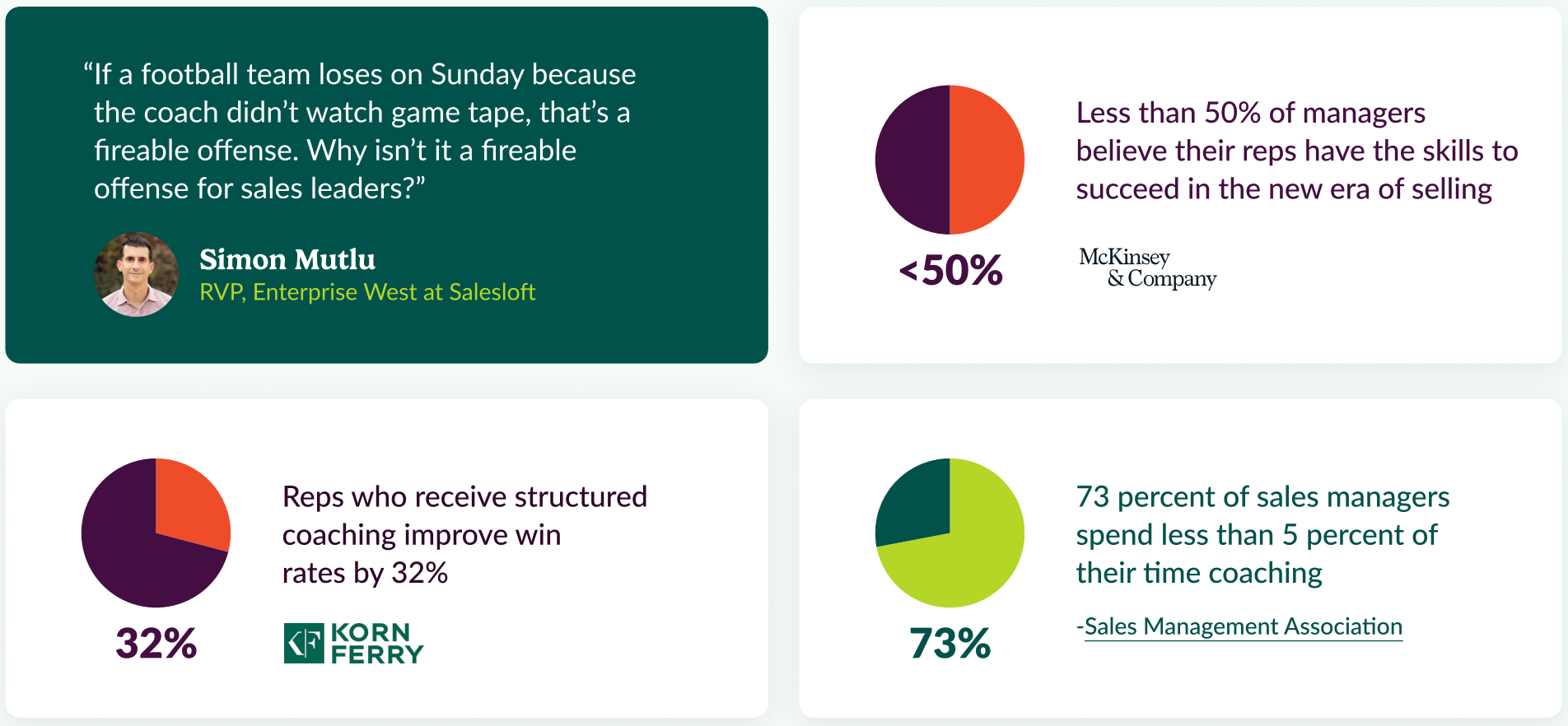
When coaching is inconsistent, so is pipeline health. High performers plateau, mid-tier reps underperform, and deal progression slows. Instead of developing reps, managers get stuck in firefighting mode, stepping in to save deals. This bottlenecks pipeline velocity and puts revenue at risk. Without a system for structured coaching, leaders are forced to rely on heroics instead of repeatable processes that drive consistent and durable growth.
The root cause
Managers naturally focus on the loudest problems, not the most important ones.
When managers lack insight into where their time is most valuable, coaching happens reactively — on the deals that are about to fall apart, not on the behaviors that reduce pipeline risk in the first place. Coaching becomes tactical instead of transformational.
How to start fixing it
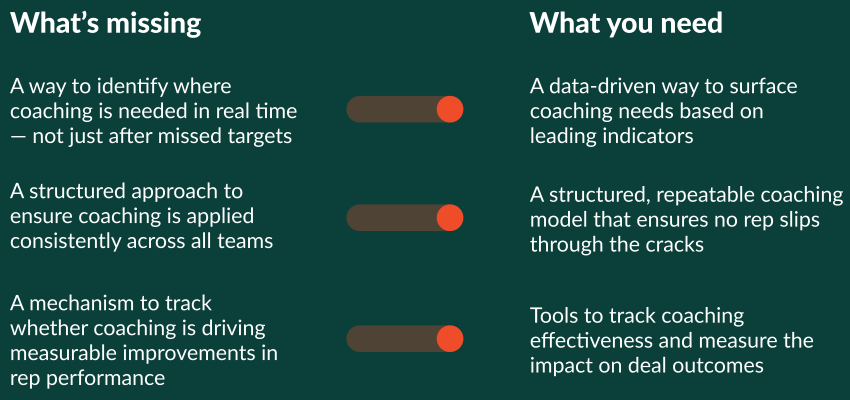
Start by eliminating blind spots. Modern conversation intelligence technology gives managers full visibility into rep activity beyond the few deals they manually track.
Instead of relying on arbitrary coaching schedules, these systems trigger coaching moments based on real performance trends.
This approach lets managers focus on critical areas and reinforce successful behaviors, turning coaching into a consistent, repeatable process. Without these tools, managers are left guessing where to intervene, missing opportunities to drive lasting improvements.
4. You Can't Operationalize Best Practices

The impact
When best practices aren’t embedded into everyday execution, reps and managers make up their own versions of what “good” looks like.
That inconsistency creates a ripple effect: forecast accuracy drops, sales cycles drag on, employee onboarding takes longer, and leaders are forced into endless debates about what’s actually working. You’re left managing misalignment across teams, fighting resistance to change, and constantly reintroducing playbooks that never seem to stick.
The root cause
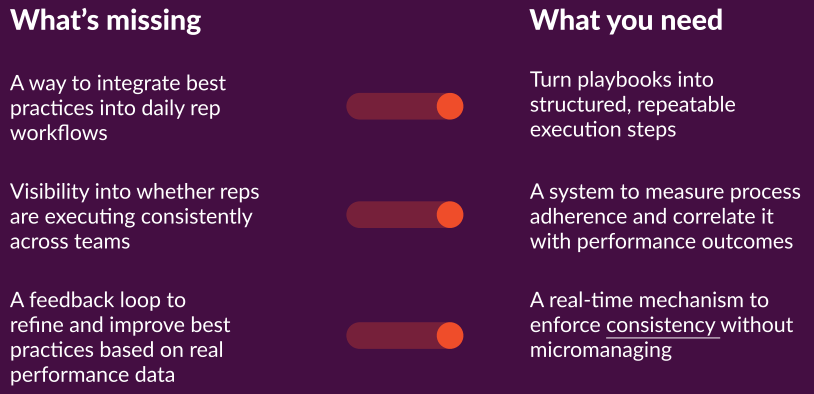
Most revenue teams don’t lack best practices; they lack a mechanism to ensure adoption.
Playbooks live in PDFs, onboarding materials, and scattered documentation, but they’re not part of daily execution.
Go-to-market teams resist rigid processes because they feel like roadblocks, so they create their own workarounds. This is why strategies that work in one quarter fail to scale across teams. Until execution is embedded in the daily workflow, best practices will remain just that: practices, not actualized results.
How to start fixing it
Playbooks and best practices are like roadmaps: useless if no one follows them. But the fix isn’t just more training or reminders. It’s embedding proven processes directly into the tools reps already use, so the right actions happen naturally.
Technology makes this possible by tracking adherence, surfacing gaps, and showing managers where coaching is needed before problems snowball.
The best solutions act like GPS for sales teams — providing turn-by-turn guidance to keep everyone on the most direct path to revenue.
Break the Barriers to Revenue Repeatability
Every quarter spent in firefighting mode costs revenue and credibility. The fastest-growing revenue teams aren’t reactionary — they build systems that deliver repeatable growth.
2025 is your year to:
- Know what’s working
- Prioritize the best actions
- Coach reps into top performers
- Operationalize best practices at scale
Learn how Salesloft helps you get there faster
Solve the complexity of modern B2B selling and unlock revenue efficiency with the leading Revenue Orchestration Platform.