




How To Turn Sporadic Wins Into Radical Repeatability
Published:


Many revenue organizations grow and achieve the same way: through grit, hustle, and heroics.
A standout rep pulls off a massive deal at the end of the quarter. A manager jumps in late to rescue a slipping forecast. A marketing campaign unexpectedly spikes inbound for a few weeks.
These moments feel like progress; and in the short term, they are. But over time, they reveal a deeper problem — heroic success can’t be repeated on demand.
This is the paradox of traditional growth. Companies work harder every quarter, yet outcomes remain unpredictable. Forecasts miss, pipeline quality fluctuates, and revenue becomes something you chase, not something you can reliably control.
Turning sporadic wins into scalable, compounding success by codifying best practices and creating a system with technology and AI makes predictable revenue achievable in practice, not just in theory.
How heroics obscure predictable revenue
Heroics thrive in ambiguity. When the engagements and behaviors that drive outcomes are poorly understood, individuals step in to “make it work.” They rely on intuition, experience, and sheer effort to push deals across the line.
But heroics don’t scale and they actively work against revenue predictability. They create fragile systems where performance depends on specific people, not repeatable actions.
When top performers leave, results decline. When markets shift, instincts fail. And when leadership asks how results were achieved, the answers are vague at best.
The core issue isn’t talent or effort. It’s that most revenue organizations haven’t successfully been able to codify best practices for driving repeatable wins, making revenue predictability difficult to achieve with any long-term consistency.
How best practices drive predictable revenue growth
Predictability is earned by recognizing that revenue is the result of a series of specific actions, taken at specific moments, within a specific context. To create consistent, repeatable results, revenue teams need to adopt a predictive revenue model. Predictive revenue models codify best actions, and can operationalize them into priorities within seller workflows.
Predictive revenue models focus on causality: understanding which actions reliably create momentum, reduce risk, and move deals forward.
Predictive revenue models give us the ability to deconstruct selling into repeatable atomic actions. This is the “show your work” of revenue. By aggregating and analyzing these actions, enterprises gain a blueprint that makes revenue observable, measurable, and ultimately repeatable. Reimagining productivity and growth at scale.
This shift is subtle but profound. Traditional revenue models focus on stages, activities, and high-level metrics. Predictive revenue models focus on causality: understanding which actions reliably create momentum, reduce risk, and move deals forward.
Revenue Context = The missing layer to create predictable revenue
At the heart of predictive revenue is Revenue ContextTM.
Revenue Context is the relationship between data and outcomes and how revenue is truly created or lost. This context is fueled by signal visibility, as well as acquiring and activating more of the right type of data. The data that positively correlates to driving the best outcomes is used to standardize workflows by answering who did what, when they did it, and what outcome it produced. It connects actions to results across sales, marketing, and customer success — creating a shared, system-level understanding of how revenue actually flows.
Without Revenue Context, organizations are left with fragments. CRM fields are filled inconsistently, activity logs have no meaning, and dashboards report what happened but not why.
With Revenue Context, those fragments become a narrative. Leaders can see not just that a deal stalled, but which actions were missing. They can identify patterns across wins and losses, across teams and segments, across quarters and years.
This is where teams can start to predict revenue growth.
How AI turns Revenue Context into prediction
Capturing Revenue Context is what makes a predictive revenue model possible, but AI is what makes it scalable.
Traditional revenue generation relies on surface-level signals: stage changes, deal size, rep sentiment, or historical close rates. These approaches assume deals move linearly and that the past will neatly repeat itself. The result is a delicate pipeline that collapses when buyer behavior changes.
Without Revenue Context, AI is generic, and often provides less valuable insights to your revenue teams. When used together, AI and Revenue Context enable each other, increasing the value and driving scalability.
A predictive revenue model applies AI differently. Instead of predicting revenue from static snapshots, it analyzes sequences of actions over time. AI agents evaluate which combinations of actions — across sellers, buyers, and moments in the deal — consistently lead to positive outcomes.
Because Revenue Context standardizes who did what, when, and with what result, AI can:
- Detect early signals of deal acceleration or decay
- Identify missing actions that increase risk long before it appears in the forecast
- Learn which behaviors matter most for specific segments, deal sizes, or buying committees
- Continuously improve predictive revenue models as new outcomes feed the system
This shifts AI methods for predicting revenue from passive reporting to active intelligence. Revenue generation stops being a backward-looking estimate and becomes a forward-looking capability, anticipating what is likely to happen, and why.
Turning insights into action with the Predictive Revenue System
Insight alone doesn’t create predictable revenue. Systems do.
The Predictive Revenue System (PRS) operationalizes Revenue Context by embedding it into workflows, coaching, and decision-making. It doesn’t just analyze past performance; it shapes future behavior to create radical repeatability in revenue generation.
When the system understands which actions consistently lead to positive outcomes, it can:
- Guide reps toward the next best action in live deals
- Surface risks early, before they impact predictive revenue accuracy
- Standardize what “good” looks like without scripting human judgment
- Enable managers to coach based on evidence, not anecdotes
Over time, best practices stop living in slide decks or tribal knowledge. They become encoded into the way revenue teams operate every day.
The compounding effect of radical repeatability
Radical Repeatability is the natural outcome of the Predictive Revenue System.
New hires ramp quicker because success is documented, forecasts stabilize because predictive revenue models identify risk early…
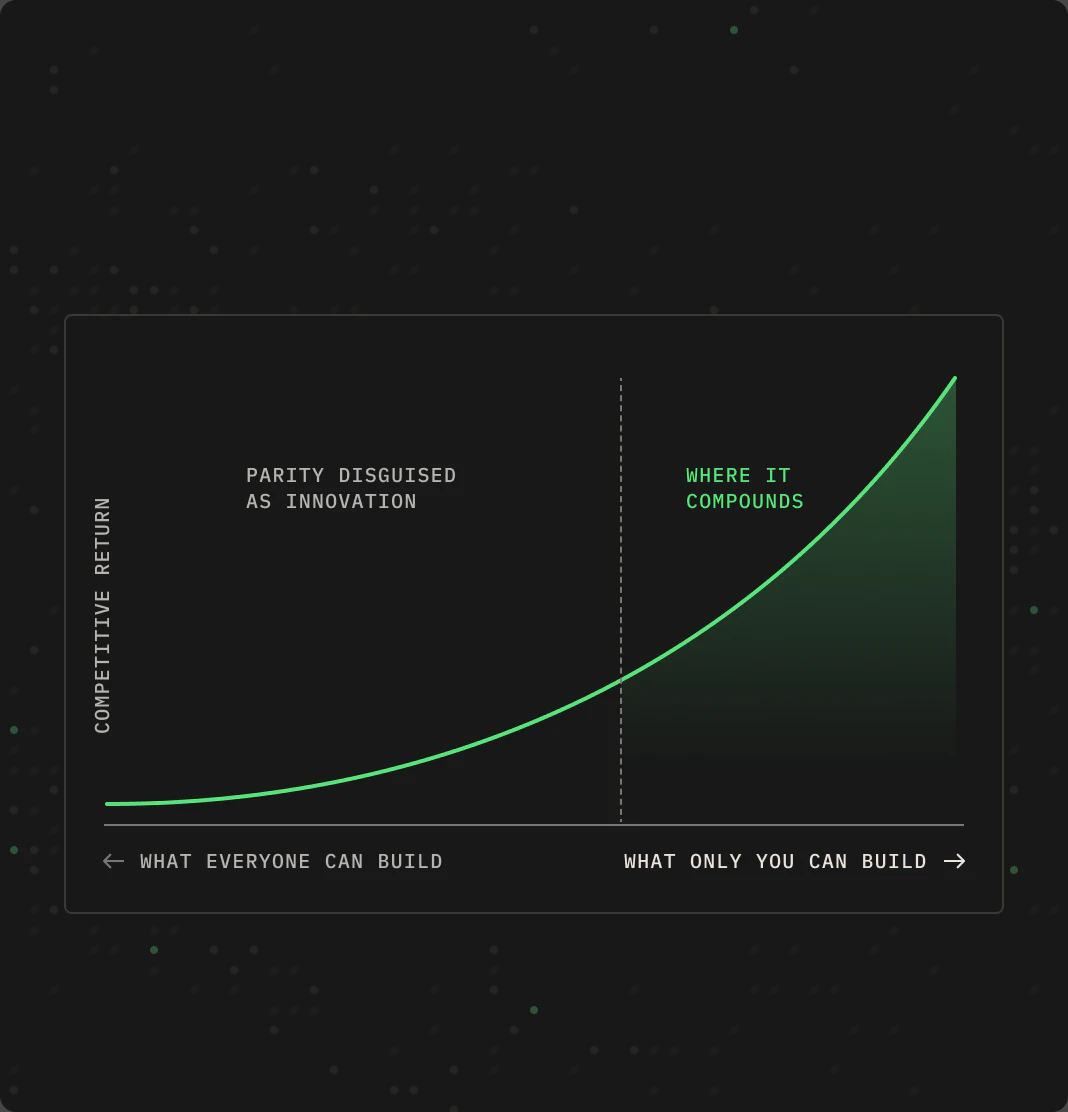
Instead of relying on a few exceptional individuals, the organization builds a repeatable engine where average performers improve faster and top performers become even more effective. New hires ramp quicker because success is documented, forecasts stabilize because predictive revenue models identify risk early, and growth compounds because learning accumulates quarter over quarter.
Most importantly, revenue becomes resilient. When markets shift, the Predictive Revenue System adapts because the organization understands cause and effect. When teams scale, performance holds because execution is standardized without being rigid.
This is the difference between hoping for great quarters and engineering predictive revenue.
Revenue predictability is now a choice
Predictable revenue isn’t the result of better luck, louder motivation, or tighter end-of-quarter pressure. It’s the result of putting better, more reliable systems in place to achieve consistent revenue growth. A system built on observable actions, shared context, and continuous learning.
The Predictive Revenue System provides the blueprint. By capturing Revenue Context and deconstructing selling into its atomic components, it turns isolated wins into predictable outcomes and predictable outcomes into sustained growth.
Heroics may win quarters. The Predictive Revenue System builds companies.
Ready to learn how AI agents + The Predictive Revenue System will shape the future of revenue?
Read the Vision Paper