



AI Agent Guide: Moving Deals Forward
Updated:
Published:


Deals keep moving when the right information reaches the right people at the right time. This guide breaks down how buyer conversations, deal context, and AI-powered next steps help sales teams keep momentum throughout the buying journey.
Context should grow richer as sales deals progress
Every meaningful buyer conversation has the potential to affect the trajectory of an opportunity. Key priorities shift, new concerns emerge, additional stakeholders may join the process.
The seller then has to carry that new information forward while it is still current. Important context can lose value when it stays inside a recording or depends on someone remembering what happened several days later.
A stronger deal process keeps what the team learns connected to the opportunity and makes the next action easier to see.
Capture what changed during the buyer conversation
The first job after a buyer conversation is understanding what changed.
Some parts of a meeting provide useful background. Others affect how the opportunity should move forward. Sellers need to capture new priorities, concerns, commitments, stakeholders, and next steps while the conversation is still fresh.
Salesloft Conversation Intelligence turns buyer conversations into usable revenue context. Summaries, Key Moments, and Action Items help sellers understand what happened and carry important information into the rest of the deal.
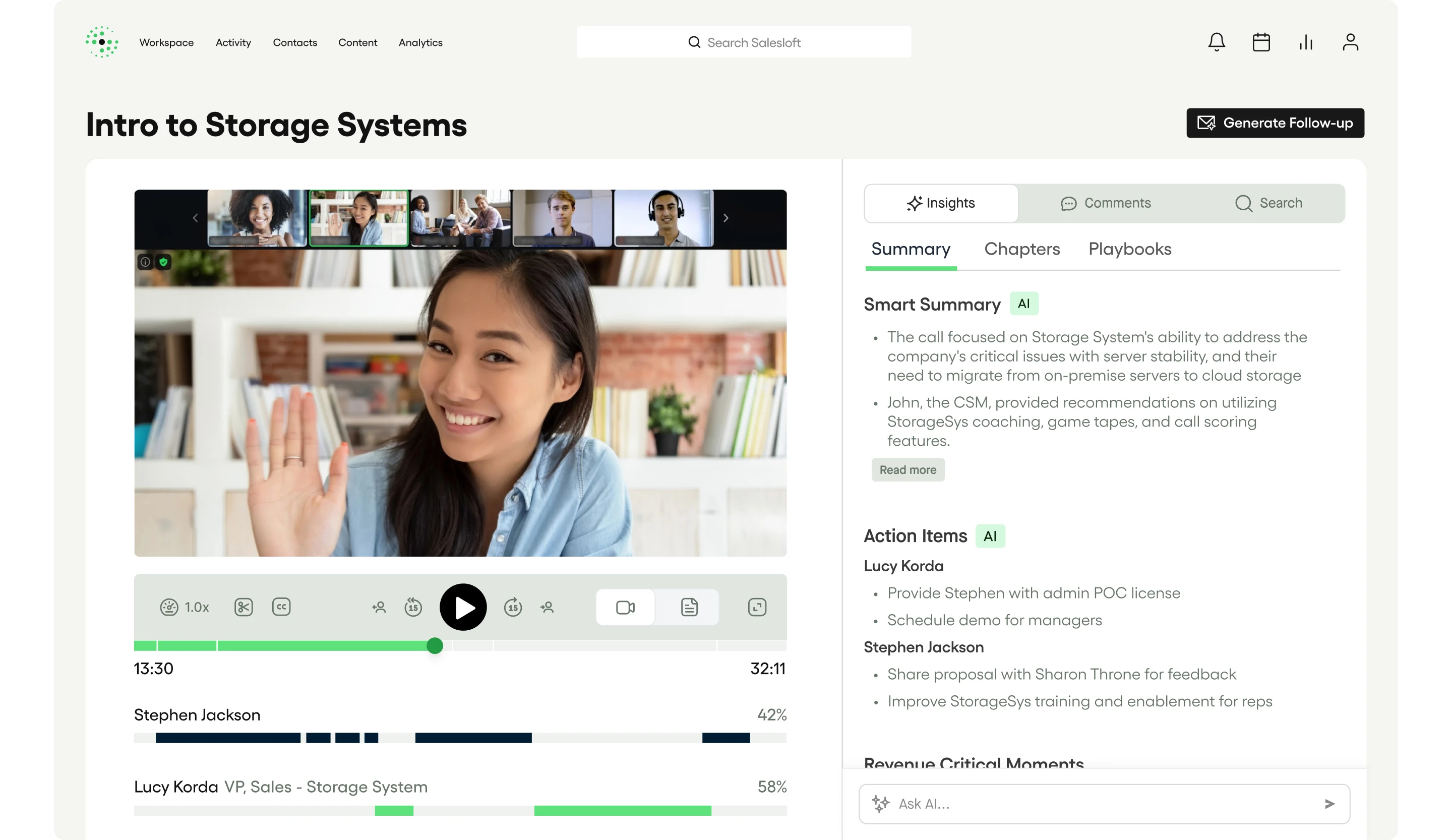
Conversation data can also feed other Salesloft experiences, helping buyer insights influence the work that follows. For example, information from conversations can contribute to the Activity Feed, Deal Summaries, Research Agents, and Ask Salesloft.
That connection matters because the latest conversation is often the freshest source of information about the opportunity and having unified intelligence can make every sales conversation more effective.
Connect conversation intelligence directly into the deal context
The next step in optimizing your use of conversational intelligence is connecting what happened in a meeting to the larger deal picture.
A seller may learn that a decision date has changed, another stakeholder needs to be involved, or the buying team still has an unresolved concern. That information becomes more useful when it is considered alongside recent activity and the rest of the opportunity history.
Deal Summaries bring vital opportunity details together into one clean view, giving sellers and managers an up-to-date snapshot without forcing them to piece information together from multiple tools.
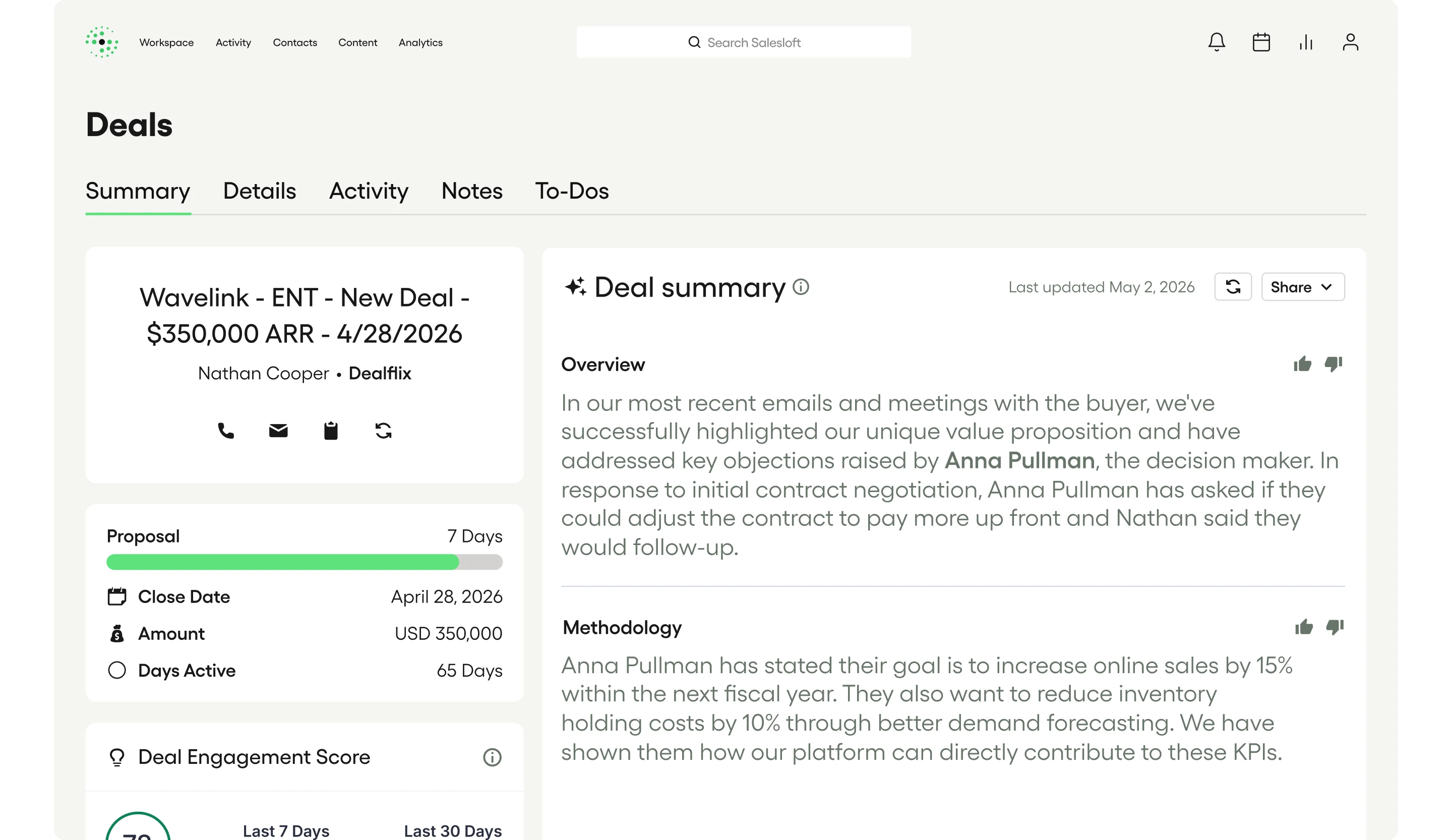
Sales Methodology Extraction can also identify information from conversations that are important within the sales process your team already uses.
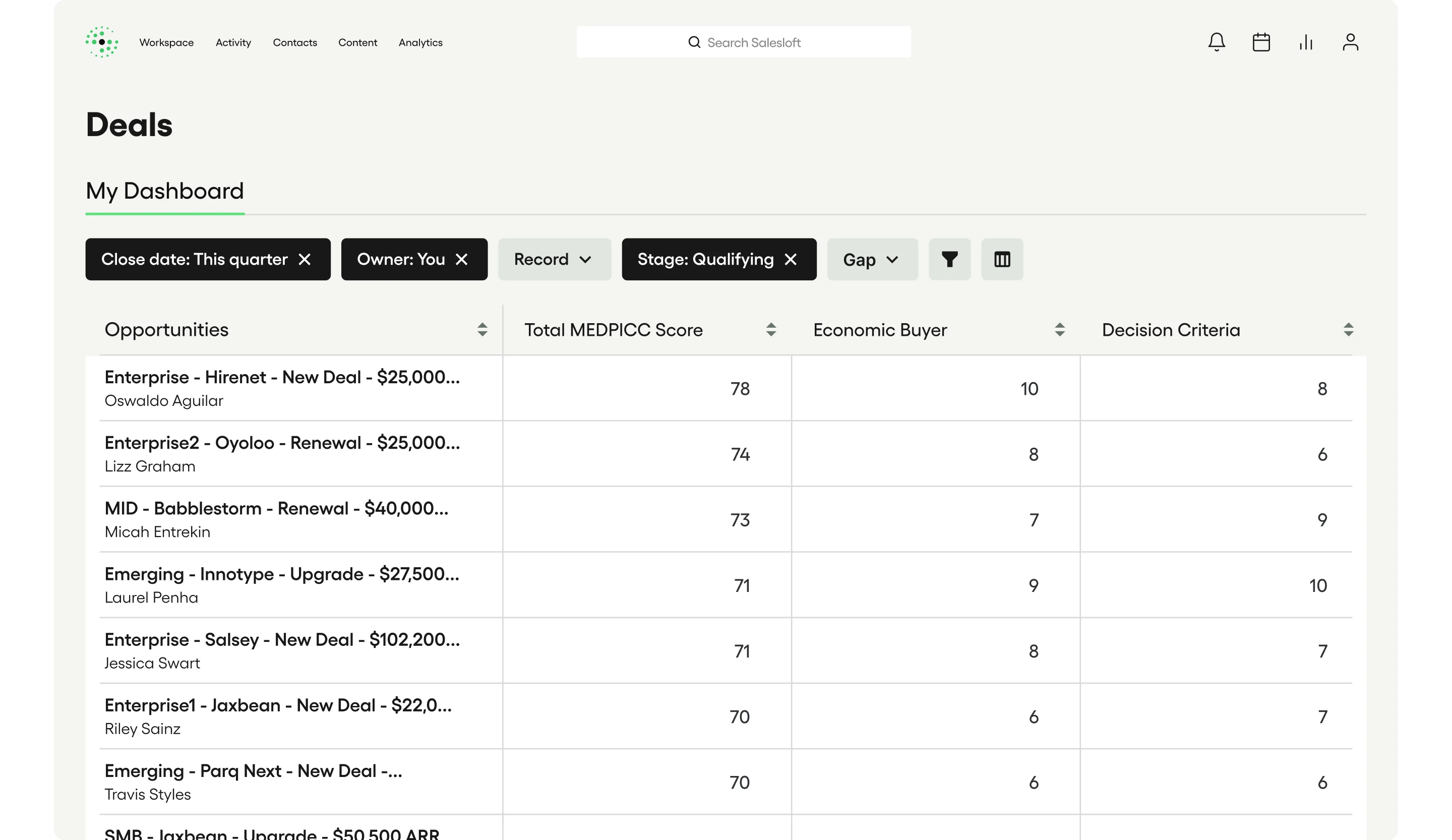
For example, for a MEDDPICC-based process, that might include decision criteria, the economic buyer, or other qualification details that surfaced during the conversation.
This helps the deal picture develop alongside the buying process and gives the team a clearer record of what has been learned.
Make recommended next steps easier for sellers to act on
Knowing what changed based on a conversation only helps move a deal forward when someone acts on it.
Conversation context can support follow-up work based on what was discussed and agreed to during the meeting. Sellers can carry action items into their workflow while the details behind them are still easy to understand.
Sales Strategist Agent uses context from calls, emails, meetings, performance, and deal data to provide guidance and recommend work based on what is happening in the opportunity.
Rhythm Prioritizer helps sellers understand where those actions fit among the rest of their work. As new activity enters the account, prioritization can adjust with it.
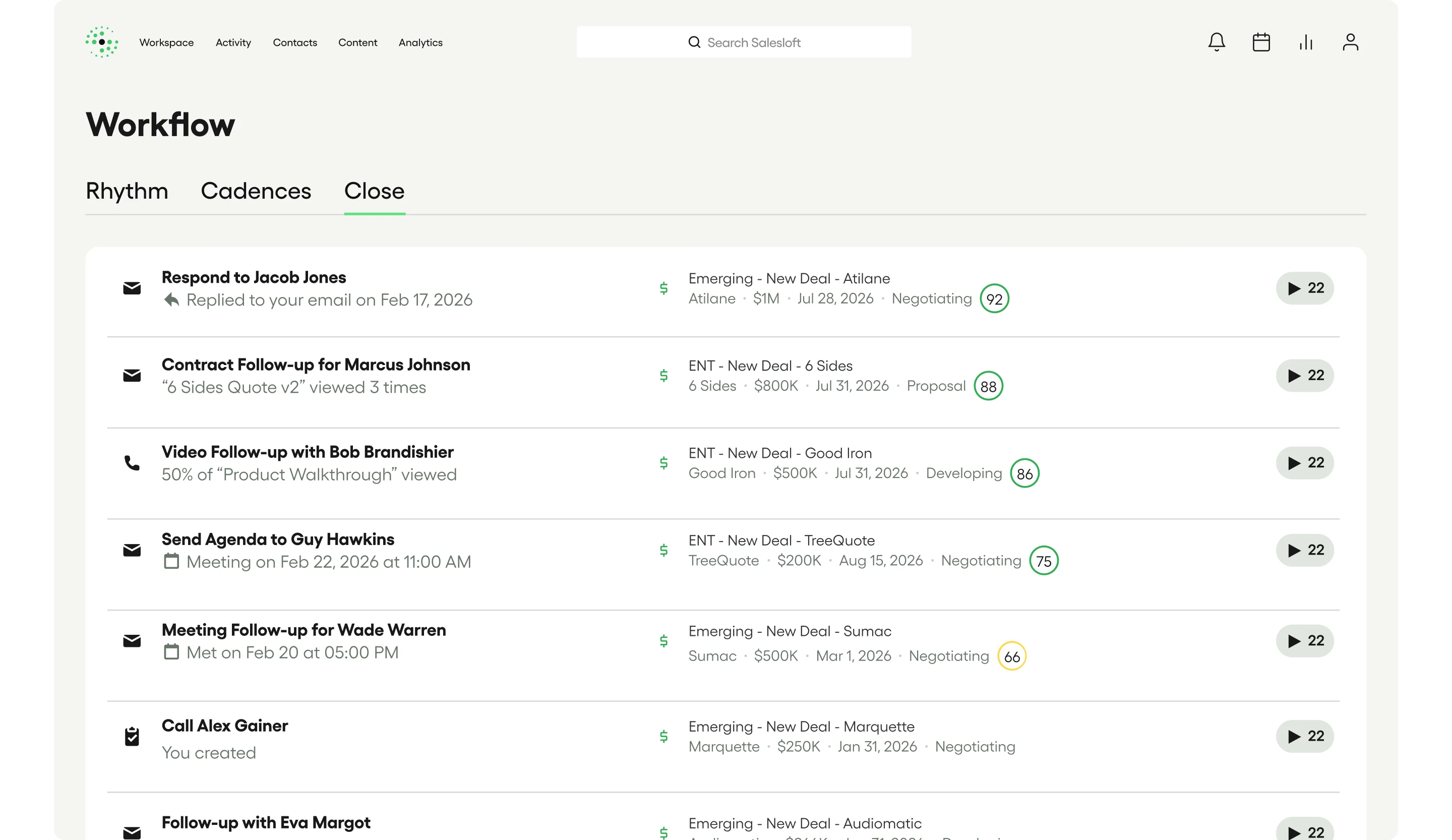
In this way, the next action stays connected to the information that prompted it, reducing the amount of context the seller has to rebuild between one step and the next.
Help your champion carry the deal forward
A large part of the buying process happens when the seller is not in the room. Champions may need to explain the opportunity to finance, another executive, or colleagues who have not participated in the same conversations.
Sellers can make that easier by helping the champion shape a clear business case using the priorities and language the buying team has already shared. Nate Nasralla’s How to Build a Business Case shows how to develop that business case collaboratively with the buyer, while The Single Soundbite Strategy focuses on giving champions concise, account-specific language they can repeat internally.
Conversation context can support both of these strategies because it gives the seller a record of how buyers describe the problem, what matters to them, and what still needs to be resolved. That makes it easier to help the champion carry the opportunity into conversations the seller will never attend.
Recognize when deal momentum starts to slow down
Every opportunity moves differently, so elapsed time alone gives an incomplete view of progress.
A longer period in stage may deserve attention when buyer engagement has also slowed. A missed commitment can become more meaningful when there has been little activity since the last conversation. Changes in stakeholder involvement can also affect how confidently the team understands the deal.
Stalled Deals Insight helps surface opportunities that have remained in a stage longer than expected so sellers and managers can decide where attention is needed.
The goal is to recognize slowing progress while there is still time to respond. Teams can also study pipeline leaks to understand where opportunities repeatedly lose momentum and use those patterns to improve how active deals are managed.
Turn deal reviews directly into actionable seller tasks
Deal reviews often produce clear decisions about what needs to happen next.
A leader may identify a stakeholder gap, ask for another buyer conversation, or decide that an unresolved concern needs attention before the opportunity progresses.
Users can create Salesloft tasks directly from Forecast or Inspect, carrying an action identified during deal review into the seller workflow while the opportunity is still in view.
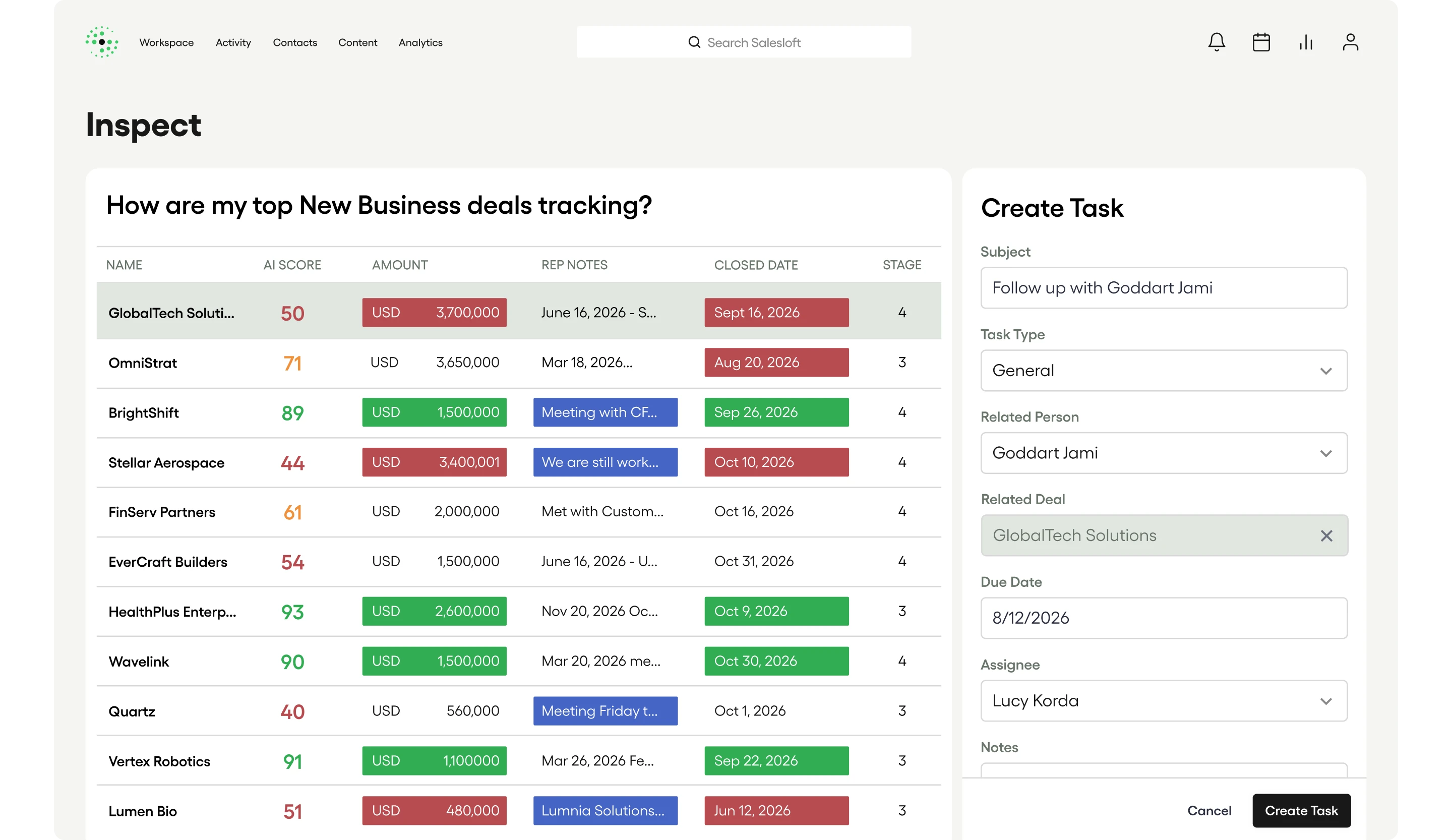
This keeps inspection and execution connected. The decision made during a deal review can become concrete seller work without requiring another handoff or leaving the action buried in meeting notes.
Keep the deal moving as new information arrives
Each buyer interaction adds another layer to the opportunity.
- Salesloft Conversation Intelligence captures what buyers say
- Deal Summaries and Sales Methodology Extraction help make that information easier to use
- Sales Strategist Agent can recommend work based on the deal context
- Rhythm Prioritizer helps sellers understand where those actions fit into the rest of their day
- Stalled Deals Insight can surface opportunities where progress deserves another look
- Decisions from Forecast or Inspect can then flow back into seller action through Salesloft tasks
Those actions create and capture new buyer activity, which adds more useful information to the opportunity.
And keeping that context connected gives sellers and leaders a clearer view of what has changed and what should happen next.
Related resources
- The Gap Between Your Best Call and Your Next Win
- Selling with Simplicity: How to Build a Business Case
- MOTOR: Pipeline Acceleration