



Seller Action AI Agent Guide: Bring Context to Every Seller Action
Updated:
Published:


Sellers make better decisions when reliable context is built into every step of the work. This guide shows how Salesloft brings together signals, research, and conversation data so sellers can act from a current picture of the account and buyer.
Make context part of the workflow
Every seller spends the day deciding where to focus, where to build pipeline, and how to move deals forward. Those decisions require an incredible amount of context. The trouble is that context rarely arrives neatly packaged.
Part of the story may live in the CRM, or another clue may come from a recent conversation or a new buyer signal. Sellers can spend a surprising amount of time pulling those pieces together before they’re ready to act.
Salesloft keeps that information connected as the account develops. New activity adds to what’s already there, giving sellers a more current picture to work from as they decide what deserves attention next.
That connected context is also what Salesloft’s AI agents work from. Each agent shines across different parts of the sales cycle, from deciding where to focus to preparing for the next conversation.
Start with where to focus
Most sellers have more possible work than they can act on in a day. So their first job is deciding where attention is most useful.
Buyer activity can help act as an actionable prompt. A reply from an important contact may push an account higher. New engagement from an account that had gone quiet may be worth another look. Other signals can offer clues about timing or interest.
But the signal alone only tells you so much. It becomes more useful when the seller can understand what’s happening around the signal and what action makes sense. Our guide to using buyer signals digs further into that process.
This is still a very manual job for most sellers. Our 2025 research found that 94% of sellers don’t use AI to guide daily execution.
The Rhythm Prioritizer agent helps decide what action should come next. It reads incoming signals and uses them to prioritize the work that deserves attention. Those actions can then become part of the seller’s day in Rhythm.
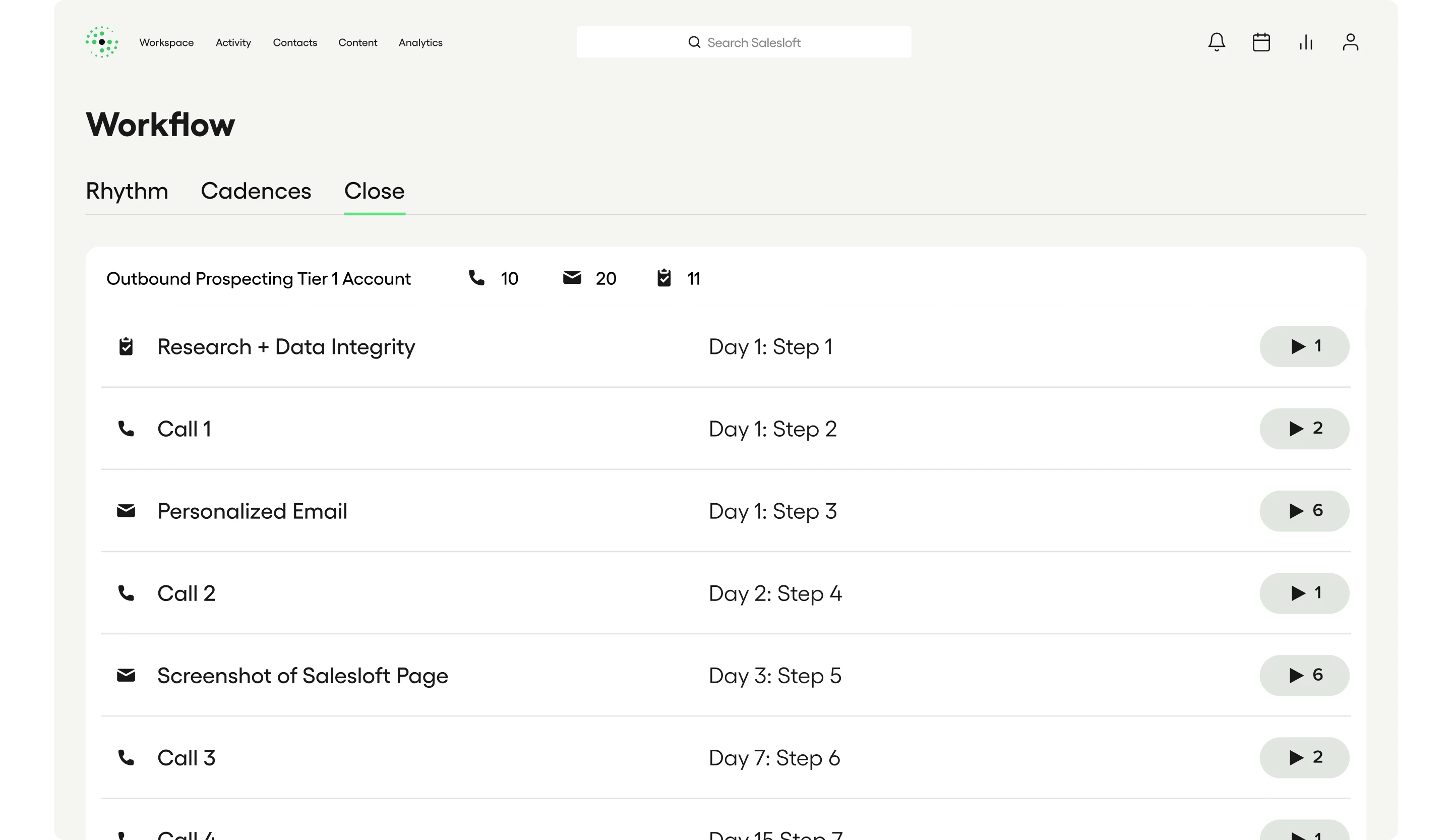
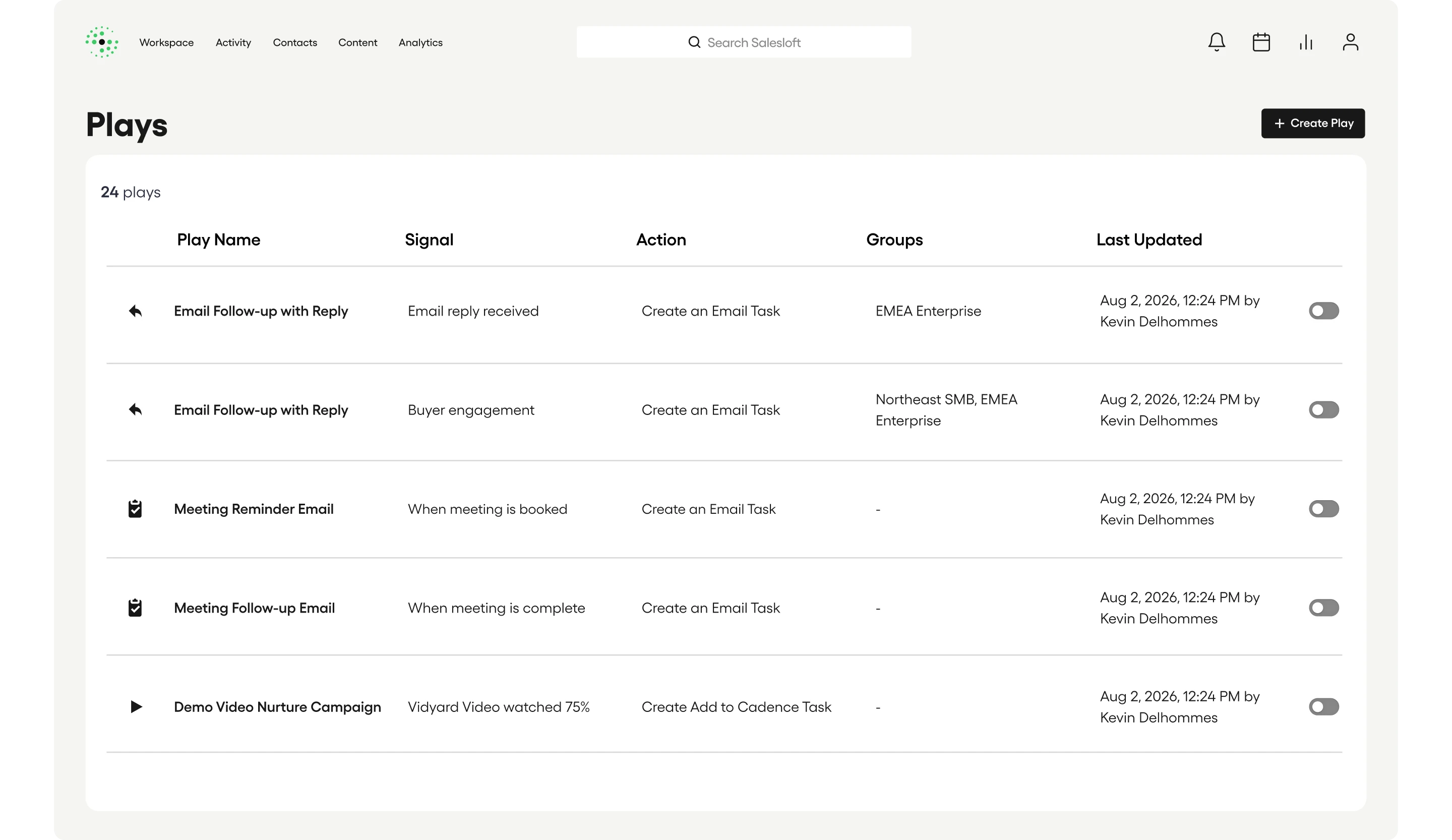
Teams can also use Plays to decide what should happen when an important signal appears. A change in buyer activity can trigger a specific action instead of leaving the seller to notice the signal and figure out what to do with it on their own.
Build enough account context to act
Once an account earns attention, the seller needs to understand why.
That usually means looking beyond a single signal. A recent business change may explain why an account is worth another look. Past engagement can show what the team already tried and how the account responded.
Gathering that picture by hand can turn into a scavenger hunt across company websites, CRM records, and previous activity.
Account Research Agent brings public information together with CRM history and Salesloft engagement in a clear account summary. Sellers get a starting point they can work from without rebuilding the research every time they return to the account.
The useful part is what happens when those sources meet. A piece of company news means more when the seller can see it alongside the history of the relationship. The same is true of CRM data. Information collected over time becomes much more valuable when it can shape the next decision.
The research can follow the seller into the next step too. Account context can inform AI-generated messaging in Salesloft, so what a seller learns during research can help shape what they write.
Understand the people behind the account
Knowing the company only gets you so far. Sellers still have to understand the person on the other side.
A job title gives you a starting point. It doesn’t tell you what someone cares about or how they fit into the buying process.
That picture develops over time. Sellers learn from previous conversations, email history, and the way a buyer engages. The context that matters for one person may look very different for another person at the same company.
Person Research Agent pulls those pieces into a concise contact profile. It can bring together call notes, email history, and CRM data to capture priorities, known objections, and buying influence. The profile can continue to change as the relationship develops.
That gives the seller continuity. They can approach the next interaction with more than a name and title because the relationship already has a history.
See where the buying group needs more coverage
Once several people are involved in a deal, another challenge appears: figuring out who may still be missing.
Buying groups rarely reveal themselves all at once. One contact introduces another. A new stakeholder appears in a meeting. Someone who seemed peripheral turns out to have real influence over the decision.
Sellers need a way to keep track of that changing cast of people and spot the gaps before they matter.
Buyer Identification Agent uses account activity and buyer personas to identify relevant stakeholders. With ZoomInfo Buying Committee data, it can also recommend contacts who aren’t yet in Salesloft or your CRM.
That extends the context already building around individual buyers. The seller can see who’s involved today and where another relationship may need to be built.
Influence Graph adds another useful layer. It maps stakeholders based on real interactions and can show sentiment and influence across the account. That gives sellers more to work with than a flat list of contacts.
The picture becomes even richer once those additional buyers join the conversation.
Let conversations keep adding context
A conversation can change what the seller thought they knew.
A buyer may clarify a priority that had only been inferred before. They may explain how a decision will be made or bring another stakeholder into the process. They may surface a concern that’s never appeared in the CRM.
Those details matter because they can change the next move.
Salesloft Conversation Intelligence captures buyer conversations so that information can keep working after the meeting ends. Conversation data can feed other Salesloft experiences and AI agents instead of sitting inside an isolated meeting recording.
That makes the account picture more current. Research gives the seller one view before the conversation. What the buyer actually says can sharpen that view and sometimes change it entirely.
The next interaction can start from there.
Ask for the context you need
Even when the information is connected, sellers will still have specific questions in the middle of the work.
Who’s been most engaged? What did this buyer say about the timeline? When did this account last respond? What’s changed since the last meeting?
Ask Salesloft gives sellers a natural-language way to ask those questions using the context already available in Salesloft. It can draw from deal and account information so sellers can get to an answer without retracing the account history manually.
That’s especially useful when the seller doesn’t need another summary. They just need one piece of information that can help them make the decision in front of them.
Put the context to work
Even when the context is clear, sometimes the harder question is what to do next.
A seller may know that an account has become more active. They may know why the company is worth pursuing and who matters in the buying group. They may also have fresh information from the latest conversation.
Now judgment comes into play.
The Sales Strategist Agent can look across calls, emails, meetings, and deal information to provide guidance based on what’s happening in the seller’s work.
That guidance is useful because it’s working from context that’s been building along the way. A recent conversation may change the recommendation. A missing stakeholder may change the priority. New engagement may make one account worth acting on sooner than another.
From there, the seller acts and creates the next piece of context.
A reply adds something new. A meeting changes what the team knows. Another stakeholder gets involved. The account keeps moving, and the information surrounding it moves too.
That’s the real opportunity for AI in the seller’s day: keeping pace with what’s changing and using that context to guide what happens next.
Related resources
- Your Field Guide to Using Revenue Signals the Right Way
- The Rise of the Buying Signal Economy
- How Salesloft Delivers More Value from Your CRM
- Pipeline-Building Agents Interactive Tour
- AI Sales Agents Guide