



AI Sales Agent Guide: Build Custom Agents with Salesloft Revenue Data
Updated:
Published:


our AI strategy should fit the way your business actually works. This guide shows how Salesloft can act on the signals unique to your team and bring live revenue context into the AI tools you already use.
Start with the unique revenue signals that drive your business
Every revenue team has signals that mean something specific inside their business. Maybe your team pays close attention to product usage because it can tell you when an account needs attention. Or there may be information in your CRM that your managers have learned to watch closely.
Your team already knows why those signals matter, but the harder part is making sure they shape what sellers do next.
Salesloft has prebuilt AI agents for revenue work that many teams have in common. But revenue teams can also use their own signals to shape seller actions through Plays. And when your company is building AI elsewhere, the Salesloft MCP Server can make live revenue context available to those tools.
That flexibility lets you start with the way your business already works and decide where your own data or logic should come into the picture.
Turn your custom signals into seller action with Salesloft Plays
Once you identify the custom signals that are meaningful for your business and define what the signal means, Plays give you a way to decide what should happen when a signal appears.
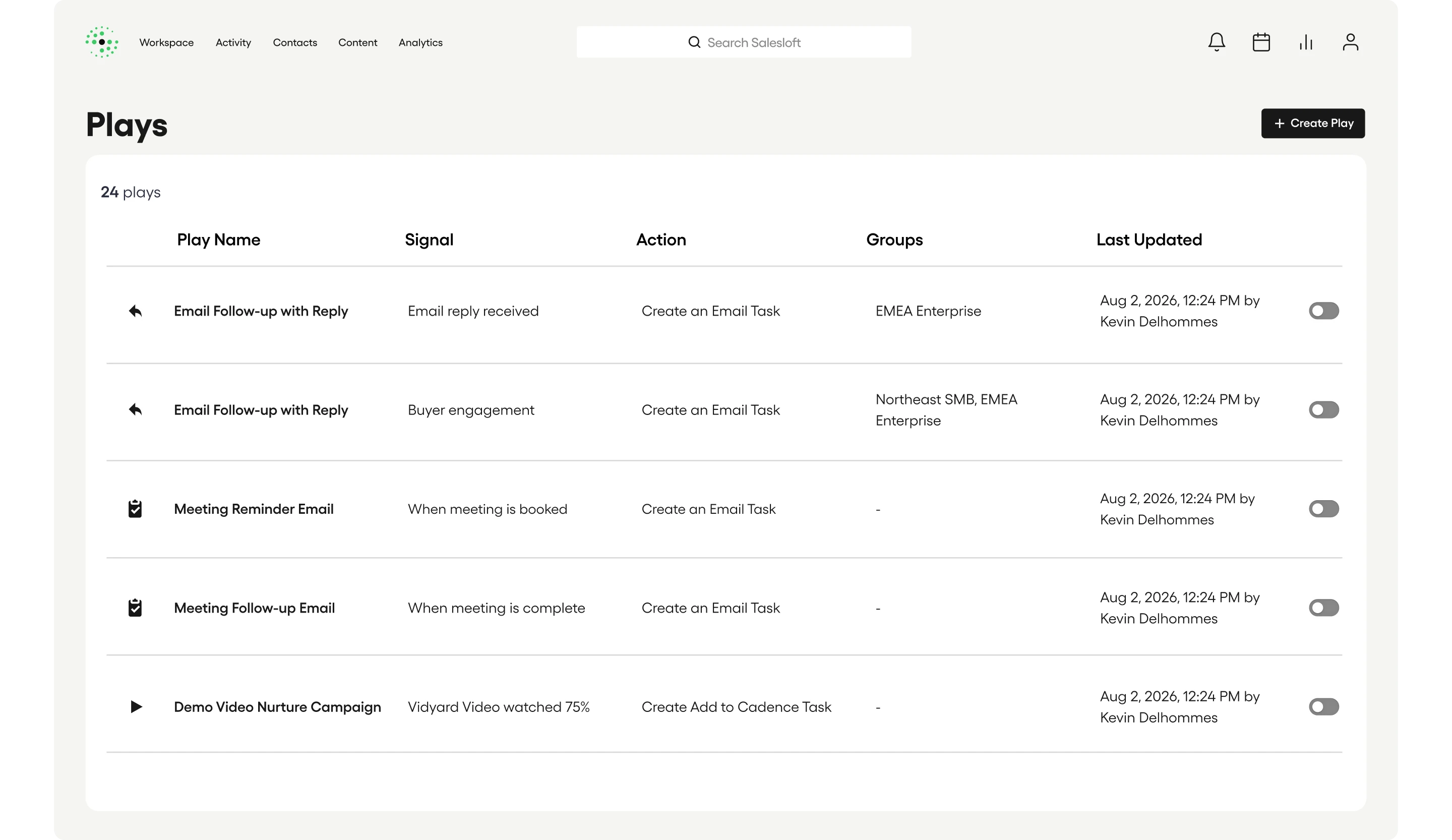
Teams can bring signals into Salesloft from internal and external sources. Integrations with iPaaS platforms also make it possible to bring in data through low-code or no-code workflows.
From there, an admin can configure a Play around the response your team wants. The signal might create prioritized work for a seller in Rhythm or prompt another action based on how your team handles that situation.
The seller doesn’t have to remember which dashboard to check or what a particular signal is supposed to mean. The right work is surfaced, along with the context for why it matters.
Carry signal context directly into personalized buyer outbound
The response to a signal changes based on the signal. Sometimes a seller needs to call an account or bring someone else into the conversation.
When the action involves following up with the buyer via email, the signal that prompted the work can also help shape the message.
Salesloft supports Plays that can generate personalized email content and recommended actions in Rhythm.
So if your team knows that a particular product-usage change deserves a specific kind of conversation, the seller can get more than an alert. They can get work tied to that signal and a starting point for the message they need to send.
The team still decides which signals matter and what should happen when they appear. Salesloft helps to carry that logic into the seller’s work.
How the Salesloft MCP server connects revenue data to AI tools
Your company may already have its own AI applications or tools built on an LLM. Those tools become much more useful for revenue work when they have current information about what’s happening with your buyers and deals.
The Salesloft MCP Server gives AI tools that support MCP access to live Salesloft data. That can include pipeline movement, deal activity, and customer interactions.
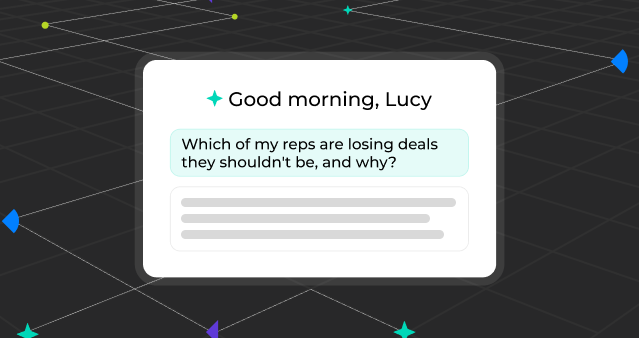
That means an AI application your company already uses can work with current Salesloft context without relying on someone to export the information first.
A manager could use an internal AI tool to prepare for a 1:1 with current deal context. RevOps could use its own AI application to explore pipeline health with Salesloft information available alongside data the company keeps elsewhere. Salesloft’s current MCP use cases include manager preparation, deal inspection, and pipeline analysis.
Combine proprietary internal data with your Salesloft context
Salesloft is one source of context. Your company may have other valuable information somewhere else.
That could be proprietary data in an internal database or information from another application your team has built. Your AI application can combine that information with live Salesloft context from the MCP Server.
Salesloft’s current MCP architecture supports combining its revenue data with customer information from databases, APIs, and file systems inside the customer’s AI application.
That opens up useful possibilities when the answer depends on information beyond the standard revenue workflow.
For example, your company may have its own way of measuring product adoption. Salesloft may hold the account history and buyer interactions. Your internal AI application can work with both sources when that combination matters to the question you’re trying to answer.
Be deliberate when deciding what custom AI capabilities to build
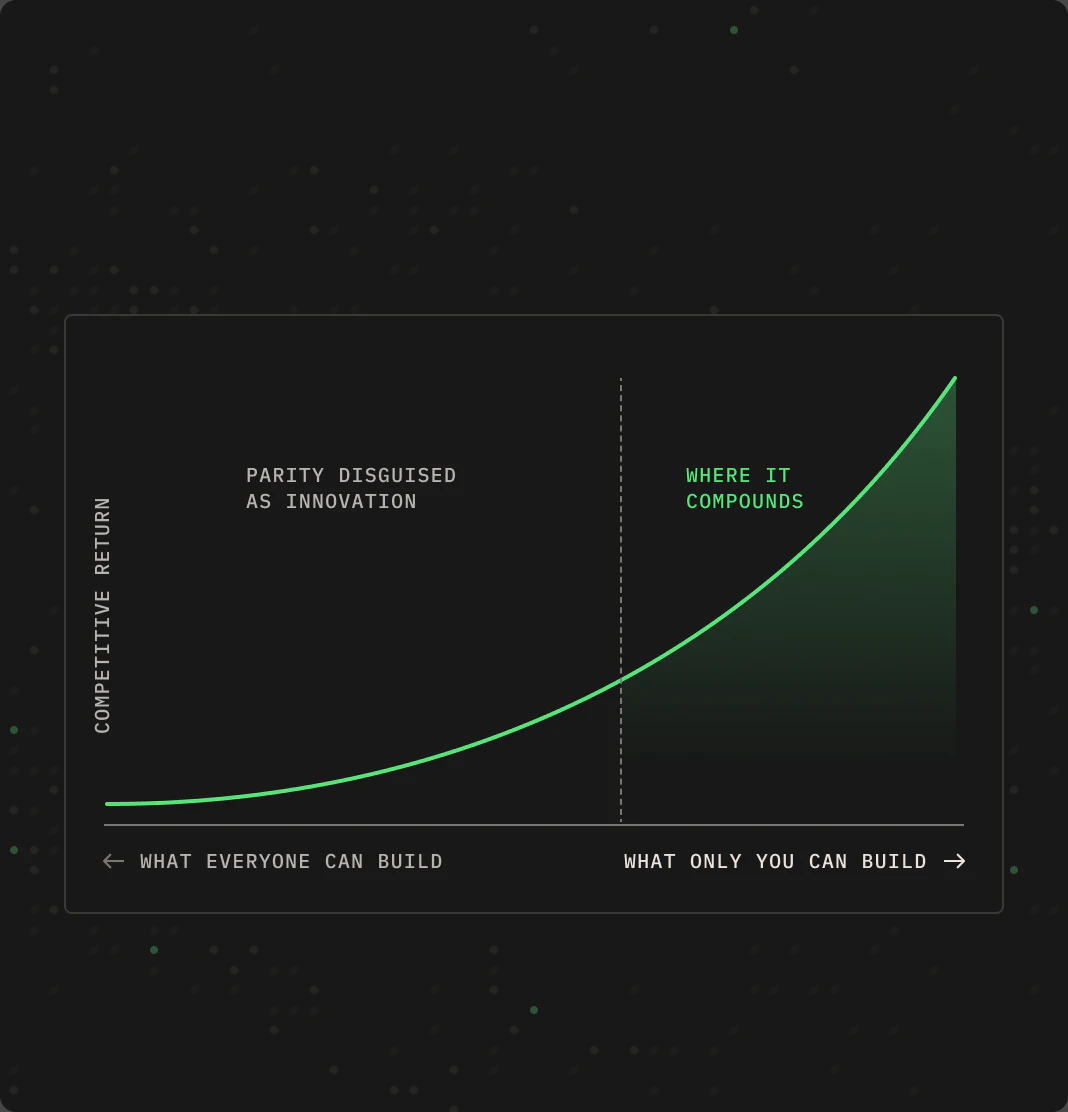
AI has made it much easier to build something quickly. But revenue teams have to decide where custom development is worth the investment.
A useful place to start is with the work your existing systems already handle well. Then look at the places where your own data or way of operating creates a need for something more customized.
Our build vs. buy guide goes deeper on that decision. One of its central ideas is that AI needs business context and a place in the actual workflow if it’s going to change revenue decisions or actions in a meaningful way.
MCP makes that decision more practical because the AI you build doesn’t have to work without Salesloft context. Your existing revenue system can remain part of the application you’re creating.
Ensure your AI strategy evolves alongside your changing business needs
The signals your team cares about today won’t necessarily stay the same.
Your product may change. Your selling motion may evolve. Managers may learn that a different signal is a better indicator of risk or opportunity.
That’s why the logic around these workflows needs room to change too. Teams can add signals and adjust how Plays respond as needs evolve.
The same idea applies to the AI your company builds elsewhere. With Salesloft MCP Server, those applications can work from live Salesloft context rather than a static snapshot of what happened weeks or months ago.
The goal is to make your own knowledge easier to use. Your team knows which signals matter and how your business operates. Salesloft gives you ways to carry that intelligence into the work sellers do and the AI your company is already building.
Related resources
- Build vs. Buy is the Wrong Question for Revenue Teams
- The AI Problem Model Context Protocol Can Solve
- Salesloft AI Agents
- Salesloft Plays