



Beyond AI Productivity: It’s Time to Redesign How Revenue Gets Done
Published:


Written by Steve Cox, CEO of Salesloft
Something strange has happened inside revenue organizations over the last few years. We’ve added what amounts to an entirely new workforce without really changing the way the business operates.
AI now researches accounts, drafts outreach, summarizes calls, updates records, identifies risk, and recommends what people should do next. At the same time, the humans are being asked to do more. Sellers carry bigger expectations, managers lead larger teams, and revenue leaders have more data, more signals, and more noise to interpret while the market around them moves faster.
And yet much of the underlying operating model looks remarkably familiar. We still inspect pipelines on a cadence, we still ask people to assemble a forecast, and we still surface a risk in one place and rely on a person to decide what it means and get that work moving somewhere else. We've added AI agents throughout that process, but in most cases we're using them to make individual steps faster rather than asking whether the process itself should still work that way.
Effort has never been the currency of a revenue organization. Outcomes are. And that gap, between what AI is doing and what it's changing, is the question the industry needs to answer.
Which leads me to a bigger question: if AI can understand what is happening across the business, act on it, and learn from what happens next, why are we still operating as if people have to connect all of those dots themselves?
Why are humans still forecasting at all?
It's time to challenge the assumption that forecasting needs to be a human activity, something sellers and managers periodically assemble so the business can understand where it's headed. That process made perfect sense when software could store information but couldn't understand the business well enough to connect it. But revenue doesn't operate on a weekly cadence just because our forecast process does. Buyers change their minds, competitors enter, usage shifts, deals accelerate and stall. The business moves continuously, but our systems still rely on people to connect what changed to what happens next. A great revenue leader bridges that gap almost instinctively:
- They see that a deal slipped and remember something a buyer said three calls ago
- They know a competitor has entered and recognize the pattern from deals they've seen before
- They decide the account needs executive air cover before anyone else has connected the dots
For decades, software could give that leader more information, but the leader still had to supply the connective intelligence. Increasingly, though, the system should be able to make the prediction itself. That doesn't make human judgment less important, it makes it considerably more valuable. A CRO should be able to challenge the system. A manager should be able to say, "You're missing something. I know this customer." And instead of that judgment disappearing into a forecast call or a Slack thread, it becomes something the entire organization can learn from. If software can call the number, humans can spend their time changing it.
AI should have to answer for what happened next
It doesn't matter if you have five agents or 500. What matters is whether the business got better because of what they did. If a system sees that an enterprise deal is at risk, why should the insight stop there? The forecast shouldn't simply describe the state of the business. It should become an input into what the business does next, understanding what is contributing to a miss, determining what kind of response has worked before, coordinating the appropriate work across people and agents, and measuring whether that work changed the outcome.
The era of celebrating AI for tasks completed or hours saved needs to end. People in revenue are accountable to the number, and AI working in revenue should be accountable to outcomes too. The loop I care about is simple: What did we do? What happened because of it? What did we learn? What should we do differently next time?
The system should make sellers better, too
Every company has people who just seem to know how to win. Great managers develop that pattern recognition over years. Great sellers accumulate judgment that doesn't fit neatly into a CRM field. And then one day, they leave, and an uncomfortable amount of what the company learned walks out the door with them.
A revenue system should learn from the judgment of the people using it and make that knowledge useful to everyone else:
- The pattern recognition of a great manager should help a new manager develop faster
- What your best sellers learn should improve how the next seller approaches a similar situation
- What works in one part of the organization should be available to the rest of it
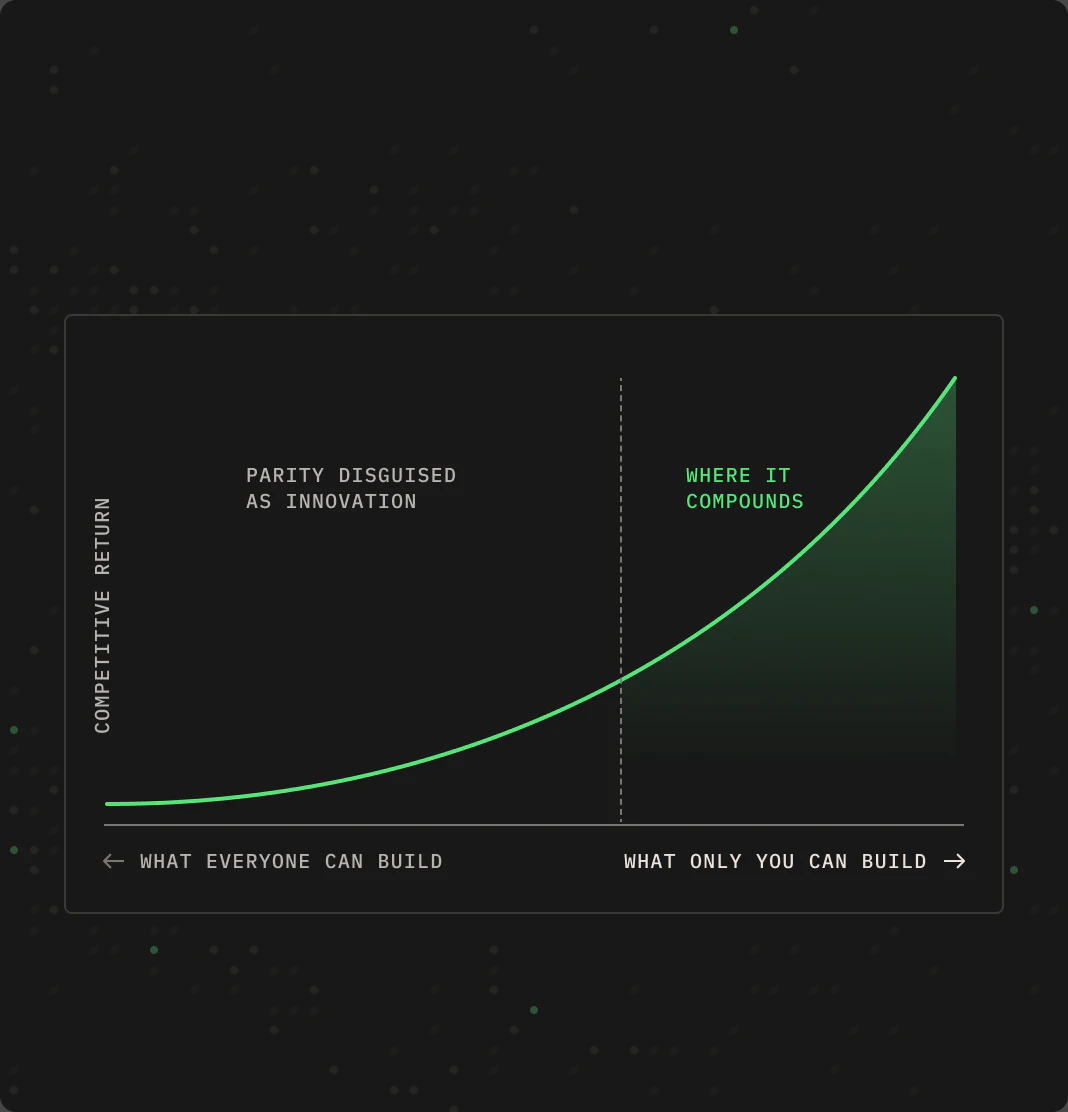
As an industry, I think we've set the bar too low. The race right now is to make sellers more productive. At Salesloft, I don't want productivity to be the finish line. I want us building technology that makes sellers better at selling. Faster is useful, but better is transformative.
This is the opportunity in front of us
Salesloft helped define modern sales engagement. Clari helped define modern revenue forecasting. Those categories solved real problems, and they still matter. Conversation Intelligence adds another critical layer: understanding what is actually happening between buyers and sellers. Bring those together, and the system can connect what teams are doing, what buyers are saying and where the business is headed. That gives us the opportunity to ask a question that none of those capabilities could answer on its own: if we were designing the revenue operating model today, knowing what AI can now do, would we rebuild it the same way?
I wouldn't. I wouldn't separate understanding the business from acting on it. I wouldn't make forecasting a periodic exercise when the business changes continuously. I wouldn't ask humans to shuttle context between systems when software can increasingly connect it. And I wouldn't measure an AI workforce by how busy it is without knowing whether any of that work changed the outcome.
That's the vision behind where we're taking the Predictive Revenue System: bringing together the work that generates and progresses revenue with the intelligence that predicts where the business is headed, so the system can increasingly understand what changed, put the right work in motion, and learn from what drove the outcome. The real ambition is bigger than a feature or an agent. It's a revenue organization where the system and the people get better together.
I don't know exactly what a forecast call looks like 12 months from now. But I have a very hard time believing we'll still gather a room full of very expensive people every Friday and ask them to manually assemble a prediction from information our systems already have. And frankly, I hope we don't. The future of revenue isn't a better way to call the number. It’s a system and a team built to change it.
See what we’re building next
Read the full press release on how Salesloft is bringing this vision to life across the Predictive Revenue System, including the product advances already delivered and what’s ahead across forecasting, agentic workflows, real-time Conversation Intelligence and Context Intelligence.